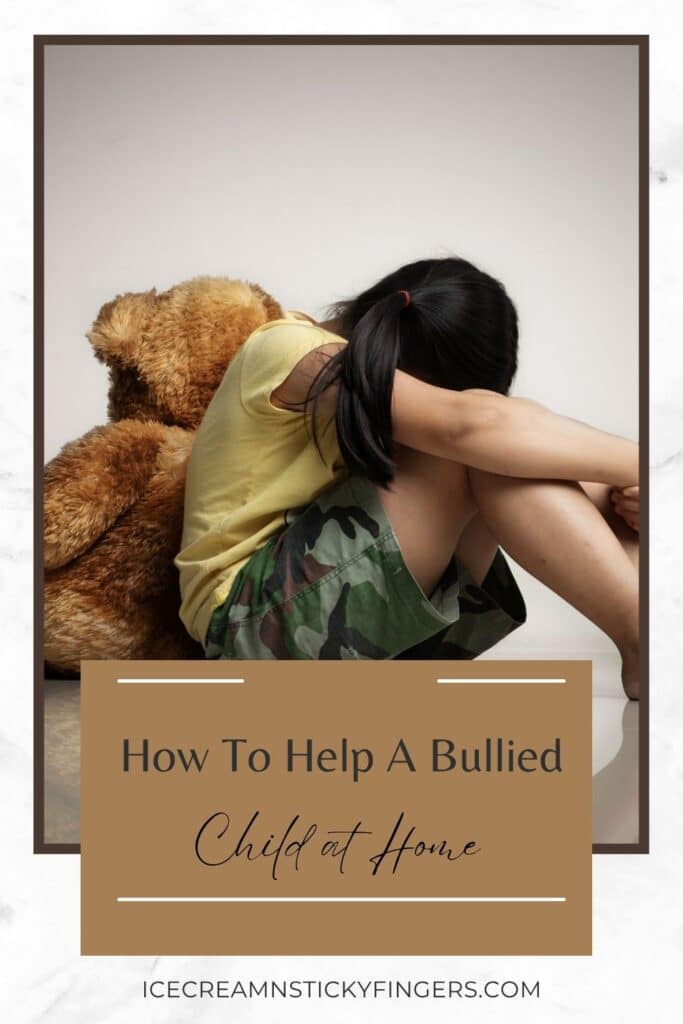
How to Help a Bullied Child at Home
When your child says, “Nobody wants to sit with me,” or suddenly begs to stay home from school, your stomach drops. If you are searching for how to help a bullied child, chances are you are already carrying a mix of worry, anger, and heartbreak. The hard part is knowing what to do first without making your child feel even more exposed.
Bullying can look obvious, like name-calling or threats, but it can also be quieter. A child may be left out on purpose, mocked in a group chat, embarrassed in class, or pushed around in ways adults do not immediately see. That is why helping starts with slowing down enough to notice what is happening and responding in a way that makes your child feel safe, believed, and supported.

How to Help a Bullied Child Starts With Listening
Most kids do not open up with a neat, full explanation. They may test the waters with small comments, act irritable after school, or say they are “fine” while clearly not fine at all. Your first job is not to solve everything in one conversation. It is to create enough safety that your child keeps talking.
Try to stay calm, even if what you hear makes your blood boil. If your child sees panic or immediate outrage, they may shut down because they worry they caused a bigger problem. Simple responses help more than long speeches. You can say, “I’m really glad you told me,” or “That should not be happening to you.” Those kinds of statements build trust.
This is also a time to ask gentle, specific questions. Instead of “What happened?” you might ask, “Did this happen in class, on the playground, online, or on the bus?” Instead of “Why didn’t you say something?” try “Has this happened more than once?” The goal is to understand the pattern without making your child feel interrogated.
Watch for Signs that Bullying May be Happening
Some children talk early. Others show you through behavior. A bullied child may suddenly have stomachaches, headaches, trouble sleeping, lost belongings, falling grades, or a strong fear of school. You might notice mood changes, clinginess, anger after screen time, or a child who used to be social pulling away from friends and activities.
None of these signs automatically mean bullying, because kids can act this way for lots of reasons. Still, if several changes show up at once, it is worth paying close attention. Trust your gut. Parents often sense that something is off before they have the full story.
Emotional Bullying can be Easy to Miss
A lot of parents picture physical bullying first, but emotional and social bullying can cut just as deeply. Excluding a child, spreading rumors, mocking appearance, and turning a group against them can leave lasting damage. Online bullying adds another layer because it can follow a child home and make it feel like there is no break.
If your child is dealing with digital bullying, take screenshots, save messages, and document usernames, dates, and times. Do not rush to delete everything right away, even though that instinct makes sense. You may need the evidence when talking with a school or reporting abuse on a platform.
What to Do Right Away
After your child shares what is happening, focus on the next small steps. Reassure them that bullying is not their fault. Kids often absorb shame quickly, especially if they have already been told to ignore it, toughen up, or stop being sensitive.
Then make a plan together. That might mean identifying safe adults at school, changing where they sit on the bus, walking with a friend between classes, or adjusting online settings and blocking accounts. Children feel less helpless when they know there is a plan for tomorrow, not just a promise that “we’ll handle it.”
It also helps to write down what happened while the details are fresh. Include who was involved, what was said or done, where it happened, and whether there were witnesses. This can be especially useful if the bullying has been going on for a while and details start blending together.
Work With the School, Not Around It
When parents think about how to help a bullied child, one of the biggest questions is when to involve the school. In most cases, earlier is better. You do not need to wait until things get severe. Repeated teasing, exclusion, harassment, intimidation, and online targeting connected to school life all deserve attention.
Start with the teacher if the issue is happening in one classroom or with one peer group. If it is broader, contact the school counselor or assistant principal. Share facts, not just frustration. Explain what your child reported, when it happened, and what changes you have noticed at home.
Ask concrete questions. What supervision is in place where the bullying happens? Who should your child go to in the moment? How will the school document incidents? When will you receive a follow-up? A calm, organized approach usually gets better results than a heated one, even though your anger is understandable.

If the School Response is Weak
Sometimes schools respond well. Sometimes they minimize, delay, or use vague language that leaves parents feeling brushed off. If that happens, keep records of every email, meeting, and incident. Be polite but persistent. Ask for the school’s bullying policy and request a clear action plan.
If your child is in immediate danger, or if threats, physical assault, stalking, or harassment are involved, take it seriously right away. Depending on the situation, that may mean escalating to district administration or contacting law enforcement. It depends on the severity, but safety always comes first.
Teach Responses that Build Confidence, Not Pressure
Parents often want to give kids the perfect comeback. Sometimes a short, practiced response can help, especially when bullying is verbal and your child freezes in the moment. A calm “Stop,” “Not okay,” or “Leave me alone” can be useful. Walking away toward a safe adult is not weakness. It is strategy.
What usually does not help is telling a child to “just ignore it” with no other support. That can make them feel like the burden is on them to absorb mistreatment quietly. It is more helpful to role-play different situations at home so they have words ready and know when to get help.
That said, not every child is comfortable being direct, and not every bully backs off when confronted. Personality matters. Age matters. The social setting matters. A kindergartener, a middle schooler, and a teen need different tools.
Help your Child Rebuild a Sense of Safety
Bullying does more than ruin a school day. It can change how a child sees themselves. A child who is picked on may start believing they are unlikeable, weird, annoying, or weak. That is why support at home matters so much.
Look for ways to remind your child who they are outside the bullying. Keep routines steady. Make time for activities where they feel competent and included, whether that is soccer, art, coding, church, scouts, dance, or just helping you bake cookies in a quiet kitchen. Confidence does not usually return because of one big talk. It comes back through repeated experiences of safety, belonging, and success.
This is also a good time to protect rest, food, and connection. Tired, overwhelmed kids have a harder time coping. Family dinners, one-on-one time, and simple predictability can be surprisingly grounding when school feels shaky.
When Counseling May Help
Some children bounce back with home support and school intervention. Others need more. If your child seems anxious, depressed, withdrawn, aggressive, or starts talking about hopelessness, counseling can be a very good next step. It is not an overreaction. It is support.
A counselor can help your child process what happened, learn coping skills, and rebuild confidence in a neutral space. It can also help parents sort out how hard to push, when to step in, and how to support without overwhelming.
Avoid a Few Common Mistakes
Parents are human, and this situation is deeply personal. Still, a few responses tend to backfire. Calling the other child’s parent in the heat of the moment can quickly get messy. Confronting a child at school can embarrass your own child. Demanding that your child fight back physically may raise the risk instead of solving the problem.
It is also easy to focus so much on stopping the bully that we forget to keep checking on the child who was hurt. Even after the behavior stops, your child may still feel nervous, embarrassed, or on edge. Healing often lags behind the solution.
How to Help a Bullied Child Over Time
Bullying is rarely resolved by one meeting or one tough conversation. Keep checking in, even after things seem better. Ask about recess, lunch, the bus, group chats, and who they spent time with that day. Casual questions often work better than intense sit-downs.
Pay attention to small improvements. A child who laughs more after school, stops begging to stay home, or starts texting friends again is showing you that safety may be returning. If things are not improving, trust that signal too. You are allowed to keep pushing for better support.
At Ice Cream n Sticky Fingers, we know parenting often means responding to the things you never planned for on a random Tuesday afternoon. If your child is being bullied, you do not have to solve every piece of it by tonight. Start by believing them, staying close, and taking the next right step. Sometimes that steady kind of help is exactly what tells a child, “You are not alone, and I am not going anywhere.”