Teaching Kids How to Speak Their Mind
What are the top reasons for teaching kids how to speak their mind? Helping children learn how to express their thoughts, feelings, and opinions confidently is one of the greatest gifts we can give them. When kids know how to speak their mind respectfully and clearly, they’re better equipped to build healthy relationships, advocate for themselves, and navigate the world with confidence.

Teaching this skill doesn’t mean encouraging rudeness or defiance. Instead, it’s about empowering kids to communicate honestly while considering others’ feelings. Here’s how parents, caregivers, and educators can help when it comes to teaching kids how to speak their mind.
Why Speaking Their Mind Matters
Children who can express themselves:
- Develop stronger self-esteem
- Are less likely to bottle up emotions
- Learn healthy conflict resolution
- Feel heard and valued
- Are better prepared for adulthood
When kids don’t feel safe sharing their thoughts, they may act out, shut down, or struggle with anxiety. Teaching open communication early lays the foundation for emotional intelligence.
Start With Emotional Vocabulary
Kids can’t express what they don’t have words for. Help them build emotional language by:
- Naming feelings out loud (“You look frustrated”)
- Reading books that explore emotions
- Using feeling charts or games
- Encouraging them to describe why they feel a certain way
The more words children have, the more accurately they can speak their mind.
Model Respectful Communication
Children learn more from what we do than what we say. Show them how to:
- Speak calmly, even when upset
- Use “I feel” statements instead of blame
- Listen without interrupting
- Disagree respectfully
When kids see adults expressing themselves in healthy ways, they’re more likely to do the same.

Create a Safe Space to Share
Kids need to know their voice matters. You can create safety by:
- Listening without immediately correcting or lecturing
- Thanking them for being honest
- Avoiding ridicule or dismissal
- Staying calm, even if you don’t like what you hear
When children feel safe, they’re more willing to speak up.
Teach Assertiveness, Not Aggression
Help kids understand the difference between:
- Passive: Staying silent or giving in
- Aggressive: Yelling, blaming, or being hurtful
- Assertive: Speaking honestly and respectfully
Role-playing common situations—like saying no, setting boundaries, or disagreeing—can help kids practice assertive communication in a low-pressure way.
Encourage Questions and Opinions
Let kids know it’s okay to think differently. Encourage them to:
- Ask questions
- Share opinions at the dinner table
- Explain their reasoning
- Respect differing viewpoints
This helps children learn that their thoughts are valuable—even when others disagree.
Praise Effort, Not Just Outcome
When kids speak their mind, acknowledge the courage it takes:
- “I’m proud of you for telling me how you feel.”
- “That was brave of you to speak up.”
- “Thank you for explaining your point of view.”
Positive reinforcement builds confidence and encourages continued communication.
Be Patient With the Process
Learning to express oneself takes time. Kids may stumble, cry, or say things imperfectly—and that’s okay. Gently guide them toward better communication without shutting them down.
Remember: the goal isn’t perfect wording, but honest expression.
Teaching kids how to speak their mind is about raising confident, emotionally aware humans who know their voice matters. By modeling respect, creating safety, and encouraging open dialogue, we give children the tools they need to express themselves—and the confidence to use them.
When kids learn to speak their mind, they learn to trust themselves. And that lesson lasts a lifetime.
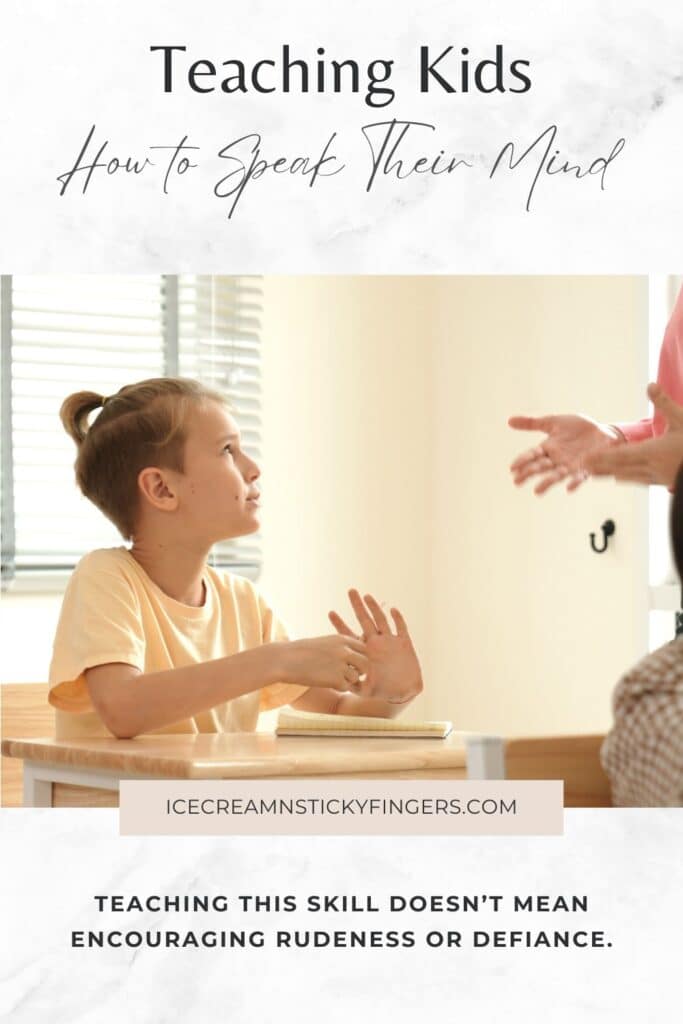
Did you plan on teaching kids how to speak their mind or did it come naturally to your child?
Related Posts:
- How Parents Can Help Their Children Dealing With Insomnia

- How to Host a Kids Sleepover Without Chaos
- What Is the Right Kids Deodorant Age to Start?
- 15 Best Audiobooks for Elementary Kids to Love
- How Parents Can Teach Their Children To Appreciate Art
- How to Talk to a Preteen Girl About Getting Their Period