With short classes, it is easy to get caught off guard when planning a build project around short class periods. Your child needs to prioritize their project so they can use class time to work on it.
If your child has ever brought home a “build day” note from school (or a half-finished kit stuffed in their backpack), you already know the challenge: class periods can be short, transitions eat up time, and small parts love to disappear. Planning a build project around short class periods isn’t about doing more; it’s about setting up the project so kids can succeed in smaller, repeatable steps.
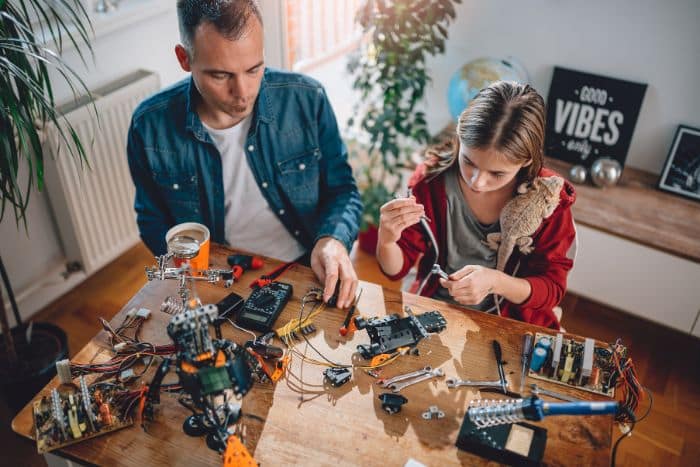
Start With a “Micro-Plan,” Not a Big Plan
The first thing you want to do is look at what the finished build should look like. Then decide on three to six mini milestones you can complete in a single session.
For many builds, a simple sequence works well: first open and sort parts, then complete the base or frame, then add moving pieces or attachments, then do a quick test/troubleshoot, and finally finish with details and cleanup. This is especially helpful because it prevents the “we ran out of time” moment from derailing the whole build.
Pack a “Two-Minute Setup” Kit
A small zip pouch in your child’s backpack can save the day. Keep it simple with a mini glue stick or tape roller (if allowed), a pencil and fine-tip marker, a few zip-top bags for leftover parts, and a small parts tray. If the project uses model kits, part organization is half the battle.
Then, take one extra minute before class build days to pre-sort pieces into labeled baggies the way many teachers do when they’re distributing model kits to thier class. It cuts down on searching for parts and helps your child jump into building right away

Time-Box the Build
Try the “10–10–5” rhythm: ten minutes of building, ten more minutes to continue while double-checking steps, and the final five minutes reserved for cleanup and packing. That last five minutes is what keeps short class period projects from turning into lost pieces and frustration the next day.
Use a Quick Photo for Continuity
Before packing up, a fast phone photo (or a quick sketch) of the build helps kids remember what they did and what’s next—especially if the kit travels between school and home.
Planning any class project is really about reducing friction: faster setup, fewer missing parts, and clear next steps. So it is important to focus on planning a build project around short class periods. And when kids feel in control of the process, they’re more likely to enjoy the project, not just finish it.