A Parent’s Guide to Toddler Social Skills
Your toddler just hugged a kid at the playground and then grabbed that same kid’s shovel two seconds later. That is toddlerhood in a nutshell, and it is exactly why a guide to toddler social skills can be so helpful. Social growth at this age is real, but it is also uneven, messy, and very normal.
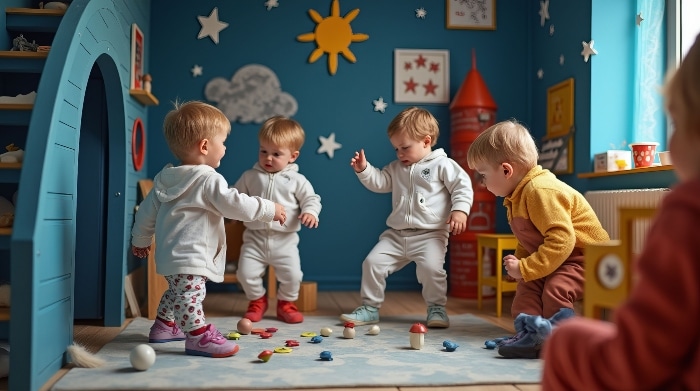
Most toddlers are not trying to be rude, bossy, or impossible. They are learning how to be around other people while still figuring out language, self-control, big feelings, and personal space. That is a lot to manage in a tiny body with very strong opinions.
What Toddler Social Skills Really Look Like
When parents hear “social skills,” they often picture sharing, saying please, and playing nicely with others. Those things matter, but toddler social development is broader than good manners. It includes making eye contact, noticing another child’s feelings, waiting a short turn, using words instead of hitting, and feeling safe enough to join a group.
It also helps to remember that toddlers usually play alongside other children before they truly play with them. Parallel play is normal. Your child may sit near another toddler, copy what they are doing, and still guard every toy like a tiny dragon. That does not mean anything is wrong.
A lot depends on age, temperament, and experience. A 20-month-old and a 3-year-old may both be called toddlers, but their social abilities can look very different. Some kids are naturally outgoing. Others warm up slowly and do much better after they have watched for a while.
A Realistic Guide to Toddler Social Skills By Age
You do not need to track every milestone like a checklist, but having a general idea of what is typical can ease a lot of worry.
Around 1 to 2 Years Old
At this stage, many toddlers are interested in other children but not especially skilled at interacting with them. They may wave, smile, copy actions, or bring a toy close to another child. They are also very likely to grab, wander off, or melt down when something does not go their way.
This age is less about friendship and more about early awareness. They are practicing being around people, reading facial expressions, and learning that other little humans also want the truck.
Around 2 to 3 years old
This is when you may start to see more simple back-and-forth moments. A toddler might offer a toy, imitate pretend play, or enjoy quick games with another child. They still struggle with impulse control, though, so hitting, biting, and refusing to share can still show up.
This is also a big language window. The more words a toddler has, the more likely they are to say “my turn” instead of pushing. Not always, of course, but more often.
Around 3 Years Old
Older toddlers often start showing more interest in cooperative play, simple friendships, and group routines. They may begin to understand basic rules like waiting in line or helping clean up. They still need support, especially when tired, hungry, overstimulated, or competing for attention.
Why Do Some Toddlers Struggle More Than Others
If your child hides behind your leg at every birthday party, or if every playdate ends in tears, it does not automatically mean there is a bigger problem. Social skills are affected by personality, development, environment, and even the timing of a nap.
Some children are cautious by nature. Some have speech delays that make social interaction harder. Some are adjusting to daycare, a new sibling, or changes at home. Others simply need more repetition before a skill sticks.
The hard part for parents is that social struggles are so public. A tantrum over a toy in your living room feels stressful. A tantrum over a toy in front of six other parents feels personal. But toddlers are still learning, and learning often looks clumsy before it looks smooth.
How to Build Social Skills at Home
You do not need a packed calendar of activities to help your child socially. Everyday home life gives you plenty of chances to practice.
Model the Behavior You Want to See
Toddlers learn a lot by watching. If you greet neighbors, thank the cashier, speak kindly when frustrated, and take turns in conversation, your child is absorbing that. They may not copy it perfectly right away, but they notice.
Narrating can help too. Say things like, “Daddy is using the spoon. Now it is my turn,” or “Your sister looks sad. Let’s check on her.” This makes invisible social rules easier for toddlers to understand.
Practice With Simple Scripts
Toddlers often need words handed to them before they can use them on their own. Short phrases work best. Try “Can I have a turn?” “I’m still using that,” “Help please,” or “All done.”
You are not aiming for a perfectly polite child on command. You are giving them tools they can eventually reach for when emotions run high.
Use Pretend Play
Stuffed animals and dolls are surprisingly useful teachers. You can act out small social moments like sharing blocks, waiting for a turn, or saying sorry after knocking something over.
Pretend play works well because it lowers the pressure. A toddler who refuses advice in the moment may happily tell a teddy bear how to be kind.
Read Books and Talk About Feelings
Stories are a gentle way to build empathy. Pause while reading and ask, “How do you think she feels?” or “What could he do next?” Keep it light. The goal is not a quiz. It is helping your child notice that other people have emotions too.
Keep Playdates Short and Simple
Long, open-ended playdates can be too much for young toddlers. A short visit with one child often goes better than a big group for hours. Choose one or two familiar activities and end before everyone is exhausted.
That is not lowering the bar. That is setting your child up for success.

What to Do In The Moment When Things Go Sideways
Social learning rarely happens in a straight line. Your toddler may do great one day and completely fall apart the next. When conflict happens, try to think coach, not judge.
If your child grabs a toy, stay calm and step in quickly. You might say, “You wanted the truck. You can say, ‘My turn next.’” If they hit, block the hit and be clear: “I won’t let you hit. You’re mad. Let’s take a break.”
This is where many parents worry they are being too soft or too strict. The truth is, toddlers need both warmth and limits. Comfort without boundaries can be confusing. Boundaries without connection can feel overwhelming. The sweet spot is calm, clear, and repetitive.
Signs Your Toddler is Making Progress
Progress does not always look dramatic. It often shows up in small moments that are easy to miss when you are tired.
Maybe your child waits five seconds instead of zero. Maybe they hand back a toy after protesting. Maybe they look at another child who is crying. Maybe they need your prompt, but they use the words anyway.
That all counts. Social growth is built from tiny repetitions, not one magical day when your toddler suddenly becomes easy at the playground.
When to Get Extra Support
Every child develops at their own pace, but there are times when it helps to check in with your pediatrician or an early childhood specialist. If your toddler rarely makes eye contact, does not respond to their name, shows very limited interest in people, has major trouble communicating needs, or has intense behavior that is not improving over time, it is worth asking questions.
Getting support does not mean you have failed. It means you are paying attention. Sometimes a little guidance makes everyday life much easier for both you and your child.
For the Parent Who Is Worried That They Did Something to Cause This
If you have ever left a playdate thinking, “I must be doing this wrong,” take a breath. Toddlers are not polished. They are not supposed to be. They are learning some of life’s hardest skills while also being asked to wear shoes, sit still, and not lick random objects.
A good guide to toddler social skills is not really about creating a perfectly behaved child. It is about helping your toddler build connection, confidence, and emotional safety one ordinary moment at a time. Keep showing them what kindness looks like, keep stepping in when they need help, and keep giving them chances to practice. The messy middle is where the learning happens.