
15 Summer Boredom Busters for Kids
By about week two of summer, the snack requests are nonstop, the house is somehow messier than usual, and somebody is already saying, “There’s nothing to do.” If you’re looking for summer boredom busters that actually work for real families, the goal is not to entertain your kids every minute. It’s to have a mix of easy ideas that buy you time, keep kids engaged, and make the long days feel a little smoother.
The best activities are usually the ones that do at least one of three things: get kids moving, give them some independence, or break up the day before everyone starts getting on each other’s nerves. And if they use supplies you already have, even better.
Why Summer Boredom Hits so Hard
Summer sounds relaxing until you’re living it. Kids are out of their normal routine, the days are longer, and the structure that helped everyone function during the school year is suddenly gone. Even children who are excited for summer break can get cranky fast when every day starts to feel the same.
That’s why the most helpful summer boredom busters are not always the fanciest ones. A simple plan beats a big plan that takes too much energy to set up. Younger kids often need activities that can start quickly, while older kids usually do better when they have some ownership and choice.
Summer Boredom Busters That Are Easy to Repeat
Create a Yes Space Outside
If you have a yard, patio, or even a small patch of driveway, turn it into a place where kids can play without hearing “not that” every five minutes. Pull out sidewalk chalk, bubbles, balls, plastic bins of water, toy cars, or a sprinkler. You do not need a Pinterest-perfect setup.
What matters is that the space feels open-ended. Kids tend to stay engaged longer when they can combine activities on their own. Chalk can turn into obstacle courses, pretend roads, or hopscotch. Water turns almost anything into a game. This works especially well for preschool and early elementary ages because they’re still happy with repetition.
Use Themed Days Without Overcommitting
Themed days can save your sanity, but only if you keep them loose. Think Water Wednesday, Library Day, Movie Lunch Friday, or Make-It Monday. The point is to reduce decision fatigue, not create one more thing you have to perform.
A predictable theme gives kids something to expect and gives you a shortcut when the boredom complaints start. If Monday is craft day, you already know what to suggest. If Thursday is park day, you do not have to reinvent the wheel by 10 a.m.
Build a Boredom Jar Together
This is one of those classic ideas that still works because it puts some of the responsibility back on the kids. Write simple activity ideas on slips of paper and let them pull one when they claim there is nothing to do. Include a mix of indoor, outdoor, quiet, messy, and helper-style tasks.
Try things like build a blanket fort, wash toy cars, make a paper airplane contest, read under a table, set up a stuffed animal school, or make a snack plate for the family. If your child can help come up with the ideas, they’re more likely to buy into the system.
Activities That Feel Fun But Also Help the Day Move Along
Give Chores a Summer Twist
Not every boredom buster has to be pure entertainment. Kids often respond better to practical tasks when they feel different from the usual routine. Washing patio furniture with a bucket of soapy water feels more like play than cleaning. Sorting socks can turn into a race. Watering plants with a spray bottle gives younger kids a job they can actually handle.
This is also a good place to be realistic. Not every child will cheerfully embrace responsibility, and some days, they will complain no matter how cute the setup is. Still, involving kids in home life helps break up idle time and teaches useful habits at the same time.
Start a Simple Summer Challenge
Kids love progress they can see. A summer reading chart, kindness challenge, scavenger hunt checklist, or try-something-new calendar can add just enough structure without making summer feel like school.
Keep the challenge light. For younger kids, a sticker chart works well. For older kids, you might try points they can trade for choices like picking dinner, choosing the family movie, or staying up a little later on the weekend. The sweet spot is motivation without turning everything into a battle.
Rotate Toys Instead of Leaving Everything Out
When every toy is available all the time, a lot of kids stop noticing what they have. Put some things away for a week or two, then bring them back out like they’re new again. This works especially well with building toys, art supplies, dolls, pretend play items, and sensory bins.
It doesn’t have to be an elaborate organization project. Even moving a few bins to a closet can make a difference. For busy parents, this is one of the easiest summer boredom busters because it creates novelty without spending money.
Low-cost Summer Boredom Busters for Hot Days
Turn the Kitchen Into an Activity Zone
On brutally hot afternoons, the kitchen can do a lot more than produce snacks. Let kids make popsicles from yogurt and fruit, stir up homemade lemonade, decorate graham crackers with cream cheese and berries, or help assemble their own mini pizzas.
Cooking activities work well because they combine sensory play, life skills, and a built-in reward. The trade-off is the mess, of course. If that makes you hesitate, choose low-prep options and set expectations upfront about cleanup.
Try Station Play Indoors
If everyone is restless and you need the day to move, set up two or three simple stations around the house. One might be coloring at the table, one could be playing with magnetic tiles on the floor, and one could be a reading spot with pillows and a basket of books.
This gives kids a little movement and variety without requiring a full outing. It is especially helpful for siblings with different attention spans because they can move around instead of fighting over one activity. For parents with toddlers and bigger kids, station play can also help you manage supervision more easily.
Make Ordinary Water Play Feel New
You do not need a pool to make water exciting. Sponges, cups, paintbrushes, spray bottles, funnels, and plastic animals can stretch water play much longer than a basic sprinkler session. Let kids paint the fence with water, rescue toys from an ice block, or run a car wash for bikes and scooters.
If you live in a place like DFW, where summer heat can get intense fast, water play can be the difference between a decent afternoon and a total meltdown. Just remember that not all outdoor times are equal. Morning and late evening are usually much easier than midday.
When Kids Need Connection More Than Entertainment
Say Yes to Boredom Sometimes
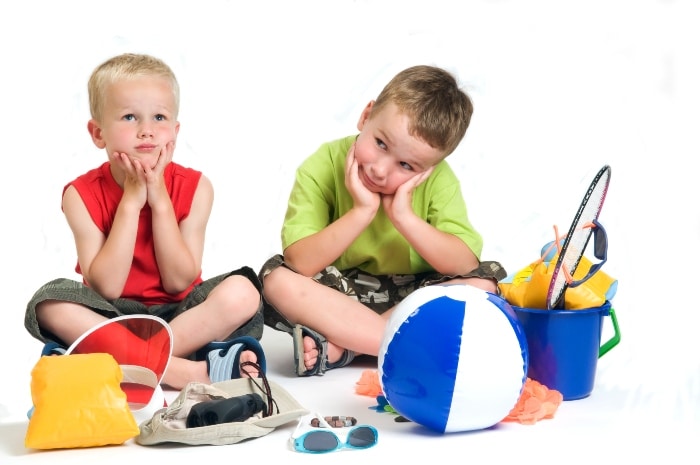
This sounds backward, but not every complaint needs an immediate fix. Sometimes kids need a little space to be bored long enough to come up with their own idea. If you jump in too fast every time, they start expecting you to be the activity director all summer.
A calm response helps. You can say, “I hear you. You can pick something from the boredom jar or come up with your own plan.” That keeps you supportive without taking over. Some kids will need help getting started, but many can figure it out once they know the answer is not always a screen.
Keep One Part of the Day Predictable
Children usually handle unstructured summer days better when at least one anchor stays the same. It might be quiet time after lunch, outdoor time before noon, library visits on Tuesdays, or family walks after dinner. Predictability lowers friction for everyone.
This matters even more if your child tends to get overwhelmed, emotional, or clingy when routines change. You do not need a strict summer schedule, but a few dependable rhythms can make the whole day feel less chaotic.
Use Screens With Intention, Not Guilt
Most parents are not trying to eliminate screens completely, and honestly, that is not realistic for many families. The trick is using them on purpose instead of falling into them because the day got away from you. A movie during the hottest part of the afternoon, an educational game while you make dinner, or a show after outside play can all make sense.
The problem usually is not screens themselves. It’s when they become the only answer to boredom. Kids often do better when screen time is one tool in the mix instead of the default setting.
A Few Summer Boredom Busters Parents Actually Stick With
The ideas that last all summer are usually the simplest ones: a basket of outdoor toys by the door, one shelf of easy crafts, a weekly outing you can count on, and a short list of go-to activities your kids already enjoy. You do not need to create magic every day. You just need enough options to keep the hours from dragging.
If you want this season to feel a little less long, focus on repeatable wins instead of big plans. A bored kid is not a sign you are doing summer wrong. It usually just means it is time for a reset, a change of scenery, or a little more structure than the day has had so far.
Some of the best summer memories come from the ordinary stuff anyway – popsicles on the porch, wet footprints in the kitchen, chalk-covered driveways, and kids who finally stop saying they’re bored because they got busy being kids.

What are some other summer boredom busters for kids?
Related Posts:
- A Realistic Screen Time Rules Example for Kids

- Halloween Activities for Kids: Family-Friendly Fun for 2026
- Halloween Non-Candy Treats for Kids: Fun, Kid-Approved Ideas
- Can Kids Share Bedrooms? What Parents Should Know
- Kids Sports vs Music: How to Choose What Fits
- Why Kids Need Boredom More Than You Think