A Guide to Backyard Play Spaces
Some backyards look great in photos and still somehow leave kids bored in ten minutes. Others have a few simple features, a little shade, and enough room to move – and those are the spaces children come back to every day. That is really the heart of a guide to backyard play spaces: building a yard that works for your real family, not an imaginary one with unlimited time, money, and patience.

If you have toddlers, big kids, or a mix of ages, the best play space is usually not the fanciest. It is the one that feels safe, easy to supervise, and flexible enough for the way your kids actually play. Some children want to climb. Some want to dig. Some want room to kick a ball around while you sit with your coffee and keep an eye on everyone. A good backyard can hold all of that, even if it is small.
What Makes a Backyard Play Space Actually Work
Parents often start with equipment, but layout matters more. A giant playset can take over the whole yard and still get less use than a simple open area, a sensory station, and a shady place to sit. Before you buy anything, think about how your child spends time outside now. Do they run laps, collect rocks, make up games, or ask for water play every afternoon?
It also helps to think in zones. You do not need formal borders or a big landscape plan. You just want a few clear purposes in the yard. One area might be for active movement, another for messy play, and another for quieter time. This keeps the space feeling useful instead of random.
Sight lines matter too. If you cannot easily see the main play area from the patio, kitchen window, or wherever you usually are, you may end up using the space less. That does not mean every backyard needs to be wide open. It just means supervision should feel manageable.
Start This Guide to Backyard Play Spaces with Safety
No parent wants outdoor play to feel like one more thing to worry about. A few smart choices up front can make the whole space more relaxed.
Check the ground first. Grass is fine in many yards, but high-traffic play areas can turn muddy fast. Mulch, rubber tiles, pea gravel, and artificial turf each have pros and cons. Mulch is affordable and soft, but it scatters. Rubber tiles cushion falls well, but they cost more. Artificial turf looks tidy, though it can get hot in Texas sun. The best option depends on your climate, your budget, and whether your kids are still in the frequent-falls stage.
Then look for hazards adults stop noticing. Loose pavers, splintered wood, rusty hardware, exposed roots, uneven steps, and standing water can all become daily problems in a play zone. Fencing is worth thinking through as well, especially if your yard backs up to a street, alley, or pond.
Shade deserves its own category. In DFW and other hot parts of the country, a backyard play space without shade can be unusable for much of the year. Trees are wonderful if you have them, but umbrellas, shade sails, covered patios, or even a simple pop-up canopy can make a huge difference. Kids stay outside longer when they are comfortable, and parents do too.
Choose Play Features Based on How Your Kids Play
This is where many families overspend. It is easy to assume a bigger structure equals better outdoor play, but plenty of children ignore expensive equipment and spend an hour happily with chalk, buckets, and a patch of dirt.
For climbers and high-energy kids, swings, climbing domes, monkey bars, stepping stumps, and balance beams can work well. If your child needs to move their body to regulate, one strong active feature may be more useful than several small toys.
For imaginative kids, think about loose parts and flexible setups. A mud kitchen, outdoor toy bin, playhouse, fort corner, or simple table for pretend picnics can go much farther than something that only has one use. The best pretend play areas invite kids to change the story every day.
For sensory play, water tables, sandboxes, digging beds, bubble stations, chalk walls, and garden corners are all solid choices. These are especially helpful for preschoolers and early elementary kids who like to explore with their hands and stay engaged without a lot of adult direction.
If you have multiple ages, variety matters more than specialization. A toddler may need a low slide and ride-on path, while an older sibling wants room for target games or sports practice. You may not be able to meet every need perfectly, but you can avoid creating a space that only works for one child.
Small Backyard? A Play Space Can Still Be Great
A smaller yard can actually be easier to manage. You do not need enough room for a full playground. You need enough room for movement, imagination, and a few repeatable activities.
In compact spaces, look for play items that earn their footprint. A bench with toy storage underneath, a folding water table, a wall-mounted chalkboard, or stepping stones that double as an obstacle course all make sense. Vertical space helps, too. Climbing walls, hanging sensory pieces, outdoor easels, and fence activities can add interest without crowding the ground.
One open patch matters more than you might think. Kids often need a blank area to invent games, race scooters, practice cartwheels, or spread out toys. If every inch is filled with gear, the yard can start to feel less playable, not more.

Budget-friendly Ideas That Still Feel Fun
You do not need a backyard makeover show budget to create something your kids love. In fact, many of the most-used features are simple.
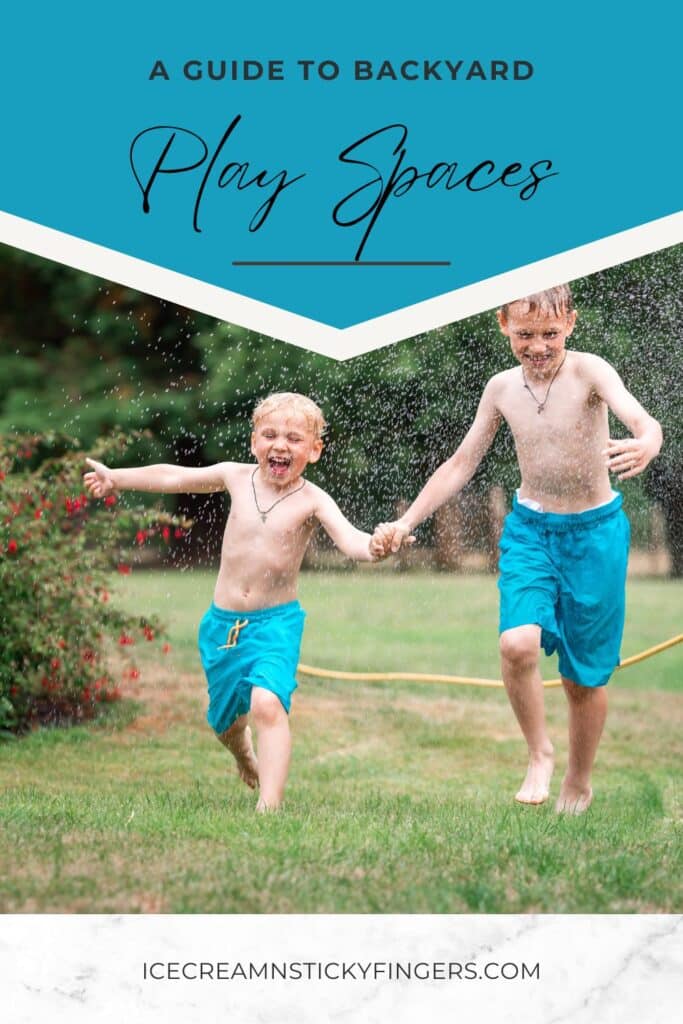
A sprinkler on a hot day, a bin of balls, sidewalk chalk, tree stump stepping paths, a container garden kids can water, or a sand-and-water station made from basic supplies can all get daily use. Old kitchen tools often become mud kitchen favorites. Painted logs can become balance beams. A fence can become an art wall with clipboards and washable paint.
If you do want larger equipment, it helps to buy slowly. Live with the space for a few weeks first. See what your children are naturally drawn to. That can save you from spending money on something impressive that turns into a backyard clothes rack.
Secondhand finds can also be worth considering, especially for playhouses, picnic tables, ride-on toys, and sports gear. Just inspect them carefully for stability and wear.
Don’t Forget the Parent Side of the Yard
A guide to backyard play spaces should always include the grown-ups, because if the space is uncomfortable for you, it will not get used as much. Parents need a place to sit, a little shade, and a setup that does not require hauling half the garage outside every time the kids want to play.
That might mean adding a weather-friendly chair near the main play area, a deck box for easy toy storage, or hooks for towels and helmets. It may also mean making peace with a yard that is not magazine-perfect. A family-friendly outdoor space should be easy to reset, not impossible to maintain.
Water access is another overlooked detail. If your kids love messy play, gardening, or summer water activities, being able to quickly fill bins and rinse things off makes a difference. The more steps something takes, the less often it happens on a busy weekday.
Make Your Backyard Play Spaces Grow With Your Family
One of the smartest ways to design a yard is to avoid making every choice age-specific. Babies become toddlers fast, and toddlers turn into kids with entirely different ideas of fun before you know it.
A sandbox may later become a digging area or garden bed. A playhouse may turn into an art station or reading nook. Open lawn space can shift from toddler ball play to soccer practice to backyard movie night. When possible, choose pieces that can adapt instead of expire.
This is especially helpful if you are planning around siblings. You do not need to redo the entire yard every two years. You just need enough flexibility to swap out how a zone is used.
Seasonality matters too. In hot climates, a summer-friendly yard may need shade and water play. In cooler months, the same space might work better with a fire pit seating area nearby for parents, a basket of outdoor blankets, or room for active games that keep kids moving.
A Few Signs You Got it Right
A successful backyard play space does not need to look elaborate. Usually, you know it is working when your kids head outside without needing a full production from you. They can move between activities, stay engaged longer, and use the space in ways you did not script.
It also works for your family when cleanup feels possible, supervision feels realistic, and the yard supports the rhythm of your day instead of complicating it. That may mean after-school snack time at the patio table, ten minutes of digging before dinner, or letting everyone burn energy while you catch your breath.
The best outdoor spaces are rarely perfect. They get muddy. Toys end up in strange places. Plans change as kids grow. But when a backyard gives your children room to move, imagine, and settle into family life, it starts doing more than entertaining them. It becomes one of those everyday spaces where the good stuff happens almost by accident. Your backyard can be a work in progress and you can use this guide to backyard play spaces to make your kids’ dream backyard come alive.