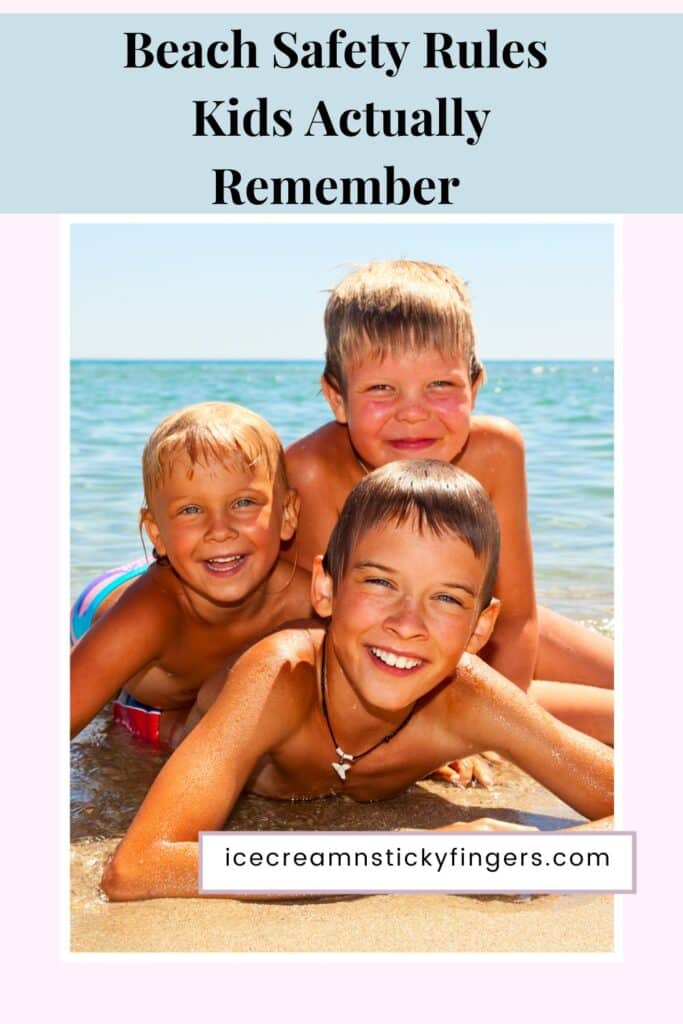
Beach Safety Rules Kids Actually Remember
Beach days with kids can feel messy before the towels even hit the sand. But going to the beach means that kids need to follow some beach safety rules kids actually remember. As you are packing snacks, sunscreen, buckets, and backup clothes, but beach-day chaos can bury safety reminders. The trick is to turn rules into simple phrases children can repeat and connect to their surroundings.

Use Short Rules They Can Say Back
Kids remember rules better when they sound like a chant. Swap the long lecture about water safety and try, “Feet stop where waves start,” or “Ask before you splash.” These small phrases create beach safety rules kids will actually remember to use even during exciting moments.
Repeat the same wording each visit so the rule becomes familiar. Ask your child to say it back before running off to play. When they repeat the phrase, they take a small part in their own safety rather than just hearing another reminder.

Connect Rules to What Kids Notice
Children pay attention to things they can see. Show them the lifeguard stand, the family umbrella, and the area where they can dig. Simple boundaries work better when kids understand exactly where they begin and end.
Sand play also needs clear reminders. Deep holes may look fun, but collapsing sand can trap a child with little warning. Parents should talk about the danger of digging too deep and explain why sand collapse risks deserve the same attention as waves. Keep digging shallow and fill holes before leaving.
Make Safety Part of Play
Rules stick when kids practice them without feeling punished. Turn check-ins into a game by asking your child to point to the grown-up in charge or walk back to the towel from their play spot. This helps build beach safety rules kids remember through action instead of repetition alone.
Praise the behavior you want to see again. A quick “You stopped at the water line just like we practiced” gives kids a clear connection between the rule and their choice. Over time, the beach starts to feel fun and more manageable for everyone.
Keep the Day Simple
Too many instructions can overwhelm young kids, especially when they feel excited. Choose a few rules before each visit and repeat them throughout the day. You don’t need perfect beach trips; kids need clear habits they can use when the day is full of distractions.