What Age Can Kids Cook? A Parent’s Guide
The first time your child insists, “I can do it myself,” while standing next to a hot stove, your heart probably does a little jump. If you’ve been wondering what age can kids cook, the honest answer is that it depends less on a single birthday and more on maturity, supervision, and the specific task.
Some kids are careful at 4 and still impulsive at 8 around heat. Others can follow a recipe at 10 but forget basic kitchen safety when they’re hungry and excited. Cooking is not an all-or-nothing milestone. It’s a gradual process, and most children can start helping in the kitchen much earlier than many parents expect. Let’s take a look at what age can kids cook!
What Age Can Kids Cook On Their Own?
Kids can begin learning kitchen skills as toddlers, but cooking independently usually comes much later. A preschooler can wash produce or stir batter with help. An elementary-age child may be able to make a simple cold breakfast or assemble a lunch. By the tween years, many kids can prepare basic meals with some supervision. Full independence with the stove, oven, and sharp knives often makes more sense in the early teen years, depending on the child.
That range may sound frustratingly broad, but it reflects real family life. Age matters, but readiness matters more.
A good rule is to match the task to the child, not just the age. If your child struggles to follow two-step directions, cooking over heat is probably too much right now. If they can stay focused, listen well, and respond calmly to correction, they may be ready for more responsibility.
Kitchen Readiness Matters More Than Age
Before you hand over a spatula or let your child crack eggs solo, look for a few signs that they’re ready to participate safely. They should be able to follow simple instructions, wait when asked, keep hands to themselves, and understand that the kitchen has real risks.
This is also where temperament comes into play. A child who rushes, climbs, grabs, or gets silly around hot food may need more time and closer supervision. That does not mean they can’t learn to cook. It just means the first lessons should happen at the counter, not at the stove.
You know your child best. If something feels like a stretch, it probably is. There is no prize for early independence in the kitchen.
Cooking Tasks By Age
Ages 2 to 3
At this stage, “cooking” really means participating. Toddlers can rinse fruits and vegetables, tear lettuce, sprinkle cheese, stir dry ingredients, and help dump pre-measured items into a bowl. They love feeling involved, and that matters.
The goal here is exposure, not skill mastery. Let them see how meals come together. Talk through what you’re doing. Name ingredients, textures, and tools. These little moments build comfort in the kitchen long before real cooking begins.
Ages 4 to 5
Preschoolers can do a bit more with close supervision. Many can mash bananas, stir batter, help measure ingredients, use cookie cutters, spread soft toppings with a child-safe utensil, and crack eggs with help. Some can also help assemble sandwiches or personal pizzas.
This is a great age to start teaching kitchen rules in simple language. Hot means stop. Knife means wait for help. Wet spills get wiped up right away. Repetition is your friend.
Ages 6 to 7
Many kids in this age range can follow simple recipes with you nearby. They may be able to make toast, wash and dry produce, peel certain foods with a safe peeler, mix ingredients, and use a butter knife for soft items like bananas or cream cheese.
Some 6- and 7-year-olds are ready to learn very basic stovetop awareness, such as standing back while you cook or helping stir a cool pot after the heat is turned off. That said, direct heat still requires very close adult involvement.
Ages 8 to 10
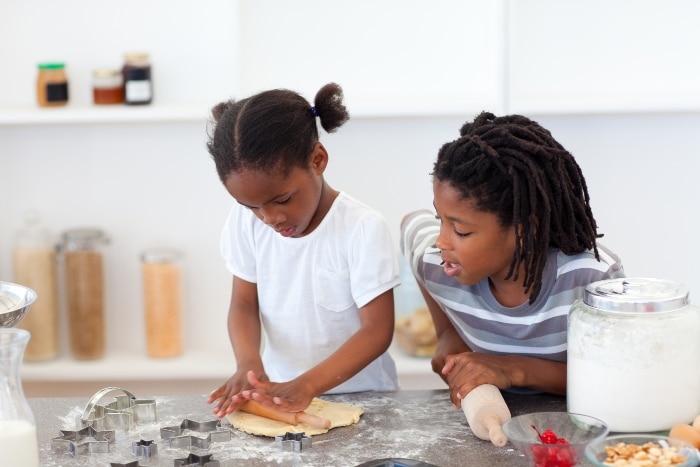
This is often the sweet spot where kids become genuinely helpful. Many can measure independently, read simple recipes, pack lunches, scramble eggs with supervision, make pancakes with help, use a microwave safely, and learn beginner knife skills with a child-sized or carefully selected knife.
If your child is ready, this can also be the age to introduce supervised stovetop cooking. Start with one skill at a time. Teach how to turn handles inward, what steam feels like before it burns, and why potholders matter even when something “doesn’t look hot.”
Ages 11 to 13
Tweens are often capable of making basic meals with less hands-on help. They may be able to cook pasta, prepare quesadillas, make grilled cheese, use the oven for simple recipes, and follow multi-step directions without constant reminders.
This does not mean zero supervision. It means you may be in the next room instead of shoulder to shoulder. A tween who can make a simple dinner one night a week gains more than a life skill. They build confidence, problem-solving ability, and a sense that they contribute to the household.
Ages 14 and up
Many teens can cook independently, including using the stove, oven, and knives safely. They can plan simple meals, check cooking times, clean as they go, and troubleshoot minor mistakes.
Still, independence should be earned, not assumed. A 14-year-old who is attentive and responsible may handle more than an older teen who is distracted and careless. Age opens the door, but judgment keeps it safe.
What Age Can Kids Cook Safely Depends On the Tool
When parents ask what age can kids cook, they’re often really asking about equipment. There’s a big difference between stirring muffin batter and taking a sheet pan out of a 400-degree oven.
Cold food prep usually comes first. Think yogurt parfaits, sandwiches, wraps, fruit salad, or ants on a log. Then move into low-risk heat, like toaster use if your child can follow safety rules, or microwave reheating with guidance about steam and hot containers.
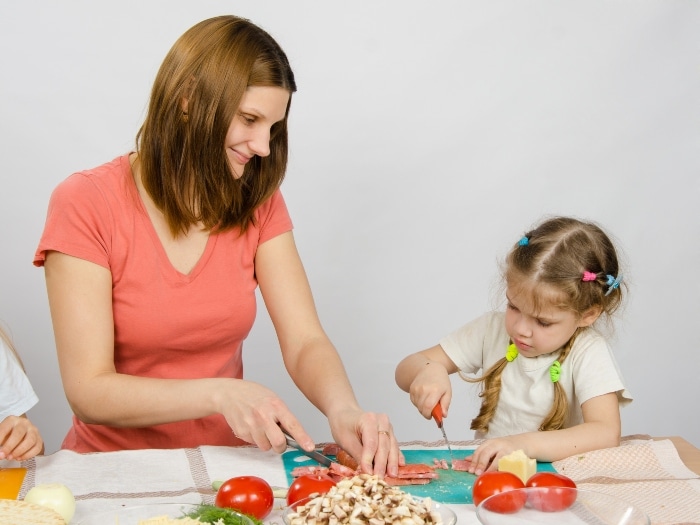
The stove and oven deserve a slower rollout. Even older kids need repeated reminders about burns, splatters, pan handles, and hot surfaces that stay hot after cooking ends. Knife skills also need a progression. Start with softer foods and proper technique, not speed.
If your child wants more independence, try introducing one new tool at a time. That keeps the learning curve manageable for both of you.
Safety Rules Every Child Should Learn Before Cooking
A few kitchen rules are worth teaching early and repeating often. Wash hands before touching food. Tie back long hair. Use oven mitts for anything hot. Turn pot handles inward. Clean spills right away. Never leave cooking food unattended. Ask before using sharp knives, the stove, or the oven.
It also helps to teach what to do if something goes wrong. If grease splatters, step back. If something starts to burn, call an adult. If they get a minor burn, cool it under running water and tell you immediately. Kids do better when they know there’s a plan, not just a list of warnings.
How to Build Kitchen Confidence Without Creating More Stress
If weeknights already feel chaotic, teaching your child to cook can sound like one more mess you do not need. That’s fair. The easiest way to make it work is to lower the stakes.
Start when you have a little breathing room, even if it’s just on a Saturday morning. Choose recipes with short ingredient lists and predictable steps. Let your child repeat the same task several times before adding a new one. Familiarity builds confidence much faster than constant novelty.
It also helps to accept that teaching cooking is slower than doing it yourself. There will be uneven measuring, eggshells in the bowl, and flour on the counter. That does not mean it’s going badly. It means your child is learning.
Praise effort, not just results. If the pancake is lopsided but they remembered to use a potholder, that counts. If they made their own lunch and used every dish in the kitchen, that still counts too.
When a Child Is Not Ready Yet
Sometimes the answer to what age can kids cook is simply, not yet. If your child ignores safety directions, panics when something changes, or turns every kitchen task into horseplay, press pause.
That pause does not have to feel like failure. Go back to lower-risk jobs like washing produce, setting out ingredients, or helping pack snacks. Skills build in layers. A child who is not ready for the stove this month may be much more capable in six months.
There is no perfect timeline. The real goal is not to raise a 7-year-old who can make dinner alone. It’s to raise a child who feels comfortable, capable, and safe in the kitchen over time. There is no perfect age can kids cook meals by themselves. But letting them help in the kitchen even at an early age creates memories and teaches kids important life skills.
Cooking gives kids more than food on a plate. It teaches patience, responsibility, math, planning, and resilience when something flops. So if your child wants to help, let them start where they are, keep the expectations realistic, and trust that small kitchen jobs today often turn into genuine life skills later.