A Parent’s Guide to Kindergarten Readiness
The first time your child walks into a kindergarten classroom with a backpack that looks way too big, it can hit you all at once. Excitement, pride, worry, and that little voice asking, Are we actually ready for this? If you have been searching for a guide to kindergarten readiness that feels realistic instead of overwhelming, you are in the right place. Let’s take a look at a parent’s guide to kindergarten readiness!
Kindergarten readiness is not about raising a child who can already do first-grade work. It is about helping your child feel comfortable with basic routines, communicate needs, handle small challenges, and start learning in a group setting. Some children will head into school reading simple books. Others will still be working on letter sounds or separating easily at drop-off. Both can be ready in different ways.
What Kindergarten Readiness Really Means
A lot of parents hear the phrase and immediately think of academics. Can my child count to 100? Recognize every letter? Write their full name perfectly? Those skills can help, but they are only part of the picture.
A better guide to kindergarten readiness looks at the whole child. Teachers often care just as much about whether a child can follow simple directions, wait for a turn, open their lunch, use the bathroom independently, and bounce back after frustration. A child who knows every sight word but cannot manage transitions may still struggle at the start. On the other hand, a child with average early academic skills and strong social-emotional skills may settle in beautifully.
That is why readiness is less about checking every box and more about building a strong foundation. Think progress, not perfection.
The Skills That Matter Most Before the First Day
Social and Emotional Readiness
This is often the biggest piece, and it gets overlooked because it is harder to measure. Kindergarten asks children to join a group, listen to adults who are new to them, and move through a structured day with a lot less one-on-one support than they may be used to.
It helps if your child can practice basic skills like taking turns, using words to solve simple problems, and handling disappointment without completely falling apart every time. That does not mean zero meltdowns. Most young kids still have hard moments. It just means they are starting to recover with support.
Separation can also be part of readiness. If your child has never been in preschool or daycare, a school day may feel like a huge leap. You do not need to panic about that, but you may want to practice short separations with trusted caregivers so goodbyes feel less unfamiliar.
Communication Skills
Your child does not need perfect speech, but they should be able to express basic needs in a way adults can understand most of the time. That includes saying when they need help, asking to use the bathroom, telling someone if they feel sick, and talking through simple social problems.
Children also benefit from being able to listen to short directions and follow them without needing constant reminders. Think simple requests like put your shoes by the door, wash your hands, and sit at the table.
Early Academic Skills
Yes, academics matter, just not in the pressure-packed way social media sometimes suggests. Most kindergarten teachers want children to come in with exposure to early literacy and math, not mastery.
Useful kindergarten basics include recognizing some letters, especially those in their name, hearing rhymes, counting a small group of objects, noticing shapes and colors, and showing interest in books. Writing their name is helpful, even if the letters are uneven and a little all over the page. That is normal.
If your child is not doing all of those things yet, it does not automatically mean they are behind. It may simply mean they need more playful exposure.
Independence and Self-help Skills
This part can make daily school life much easier. Can your child put on a jacket with some effort? Open simple containers? Wash hands well enough? Use the toilet, wipe, flush, and wash up without a full support team?
Teachers understand that young children still need help. But in a classroom with many students, small independent skills matter. They reduce stress for your child and help the day run more smoothly.
How to Build Readiness at Home Without Turning Home into School
The good news is that most readiness skills can be built through normal family life. You do not need a mini classroom in your living room.
Start with routines. Predictable mornings, regular mealtimes, and consistent bedtimes help children feel secure and teach them how to move through a schedule. Kindergarten comes with a lot of structure, so even simple home routines can prepare them.
Read together often. This may be the most useful habit of all. Reading aloud builds vocabulary, listening skills, attention, and background knowledge. Ask simple questions as you go. What do you think happens next? How does that character feel? Keep it light and conversational.
Make room for play. Pretend play, building toys, puzzles, drawing, and outdoor play all support school readiness. Kids build language, problem-solving, motor skills, and emotional regulation through play. Worksheets have their place in small doses, but they should not be the main event for a 4- or 5-year-old.
Let your child help with real life. Sorting socks builds matching skills. Setting the table supports counting and following directions. Cleaning up toys teaches responsibility and routines. Even grocery shopping can become a lesson in noticing letters, colors, shapes, and categories.
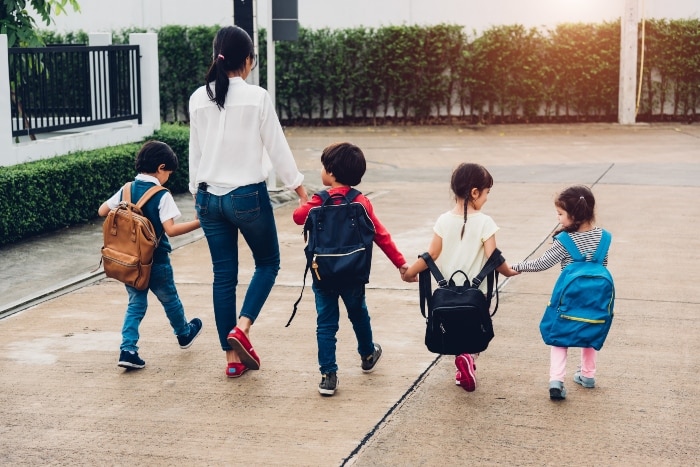
Practice small independence wins. Encourage your child to carry their own backpack, put away shoes, open snack packages, and ask for help when they need it. These little moments add up quickly.
A Guide to Kindergarten Readiness for Worried Parents
If you are worried your child is not ready, take a breath before you assume the worst. Readiness is not one fixed finish line, and children develop unevenly. One child may be socially confident but fine-motor delayed. Another may know letters and numbers but struggle with transitions.
It also depends on the school and the child. Some kindergarten programs are more play-based. Others are more structured and academic. Some children need time to warm up in any new setting, even when they are absolutely capable.
Instead of asking, Is my child fully ready, a better question is, What skills would help my child feel more confident right now? That shift makes the process feel much more manageable.
If you have bigger concerns about speech, behavior, sensory needs, or developmental delays, it can help to talk with your pediatrician, preschool teacher, or the school itself before the year begins. Getting support early is a strength, not a failure.
Signs Your Child May Be Ready for Kindergarten
There is no perfect checklist, but many children are on a solid path when they can handle short separations, follow simple routines, communicate basic needs, and participate in group activities with some support. They may show curiosity, ask questions, enjoy stories, and try tasks on their own even when they are not instantly successful.
That last part matters more than many parents realize. A child who is willing to try, make mistakes, and keep going is often better prepared for school than a child who only feels comfortable when everything comes easily.
How to Ease the Transition Before School Starts
In the weeks before kindergarten, talk about school in a calm and positive way. Walk or drive by the building if you can. Practice the morning routine. Let your child try on their backpack, open their lunchbox, and get used to the idea of a school day.
Keep your tone steady. It is fine to say school is a big change, but try not to load it up with your own anxiety. Kids are incredibly good at picking up on that. If you are emotional, that is normal too. Just make sure your child hears confidence along with your feelings.
If your family follows Ice Cream n Sticky Fingers, you already know parenting usually goes better when we stop chasing perfect and focus on what actually helps. Kindergarten is no different. A calm routine, realistic expectations, and a little practice will do more than pressure ever could.
Your child does not need to walk into kindergarten knowing everything. They just need a start, some support, and the chance to grow into it. And honestly, so do most parents. Don’t stress if you don’t follow this guide to a parent’s guide to kindergarten readiness exactly. Make this plan fit you and your child’s needs.