A Small Bedroom Makeover Example for Busy Families
A small bedroom can become the place where laundry piles, outgrown toys, bedtime books, and one more “special” stuffed animal all land at once. This small bedroom makeover example is for the family bedroom that needs to work harder without turning into a picture-perfect project nobody can actually maintain.

The goal is not to make a little room look empty. It is to give every important thing a place, make bedtime feel calmer, and leave enough floor space for a child to play, get dressed, or simply move around without stepping on a block. You can make a noticeable difference over a weekend, even if your budget is limited and your helper is a very enthusiastic 6-year-old. Let’s take a look at a small bedroom makeover example that is actually doable.
A Small Bedroom Makeover Example: From Crowded to Calm
Picture a typical 10-by-10-foot child’s bedroom. It has a twin bed, a small dresser, a toy bin that has overflowed, and a closet that somehow holds less than it should. The walls are a bright color chosen years ago, and the room feels busy before anyone has even opened a drawer.
For this makeover, start by deciding what the room needs to do every day. In this case, it needs to support sleep, getting dressed for school, reading before bed, and storing a modest number of toys. It does not need to hold every toy your child owns, every out-of-season outfit, or every piece of baby gear you are not ready to part with yet.
That distinction is where the room starts to change.
Step 1: Clear the Floor Before Buying Anything
The fastest way to make a small bedroom feel bigger is to uncover the floor. Pull everything out from under the bed, beside the dresser, and behind the door. Sort it into four simple groups: keep in the room, move elsewhere, donate, and trash.
This is also a helpful moment to involve your child without making it an exhausting all-day negotiation. Let them choose a few favorite toys, books, and comfort items that will stay visible. The rest can rotate. Kids often play more deeply when they can actually see and reach what they have.
Be realistic about sentimental items. You do not have to make every decluttering decision in one afternoon. Put the hard-to-decide things in a labeled tote and revisit them later. A calmer room is the priority, not winning an argument with yourself about a tiny dinosaur shirt from three years ago.
Step 2: Choose Furniture that Earns its Footprint
In a compact room, every large piece needs a job. A bed with open space underneath is especially useful because it creates hidden storage without taking up another inch of floor. Low bins with lids can hold off-season clothes, extra bedding, or toy rotation items. Use matching labels, or add picture labels for younger children who are not reading yet.
If the existing bed sits too low to fit bins beneath it, bed risers may help, but consider your child’s age and comfort. A taller bed can be harder for a preschooler to climb into safely. In that situation, shallow rolling bins may be a better answer than raising the frame.
A tall, narrow dresser often works better than a wide one, provided it is secured to the wall. Wall anchoring is not optional in a child’s room. Drawers are tempting climbing equipment, especially when your child is trying to reach a favorite shirt five minutes before school.
Try to avoid adding a bulky bookshelf if books can fit in a small wall-mounted ledge, a narrow book rack, or a basket beside the bed. A few forward-facing books look inviting and are easier for young children to put away than a tightly packed shelf.
Step 3: Give the Closet a Second Job
Closets are often underused because they are set up for adult-sized hanging clothes. For a child’s room, add a second lower hanging rod so little hands can reach everyday outfits. Keep the higher rod for dress clothes, seasonal items, or clothing you are saving for a younger sibling.
Use the closet floor for bins, not random piles. One bin can hold pajamas, another can hold dress-up clothes, and a third can hold shoes. If your child has a lot of toys, the closet can also become the toy storage zone, with only a few favorite items out in the room.
The trade-off is visual. An open closet full of colorful bins can still look busy, while closed storage looks calmer but may cost more. If you are working with a small budget, simple fabric bins in one or two colors provide plenty of visual relief.
Create a Bedtime Zone, not a Showroom
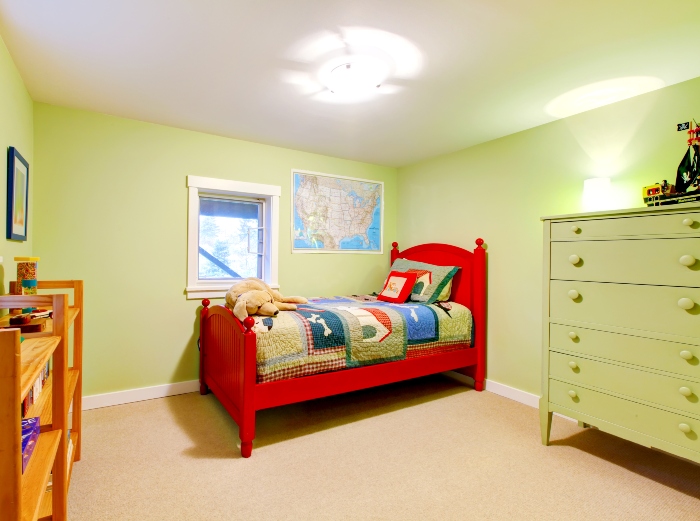
Once the room is cleared and storage is handled, make the bed the visual anchor. Choose bedding that is easy to wash and forgiving of real kid life. White bedding can look fresh, but it may create more laundry stress if your child regularly brings snacks, markers, or muddy socks upstairs. A medium-tone comforter, washable quilt, or patterned duvet usually hides everyday life better.
For this small bedroom makeover example, use soft warm white or light greige on the walls, then add personality through bedding, removable wall decals, and a favorite framed print. Pale colors can make a room feel more open, but the best color is one your child finds comforting. If they love blue, green, lavender, or even a bold accent wall, there is room for that.
Keep the area around the bed simple. A small basket for bedtime booksand a water bottle is often more useful than a traditional nightstand. Add a clip-on reading light or a small lamp with a child-safe, easy-to-reach switch. This gives your child some independence at bedtime without requiring another piece of furniture.
Blackout curtains can make a bigger difference than another decorative item, particularly for early risers, nap schedules, or bright Texas summer evenings. If blackout panels feel too dark during the day, choose a light-filtering shade underneath and save the heavier curtains for nighttime.
Add Personality Without Adding Clutter
A child’s bedroom should feel like theirs. The key is giving their interests a home instead of letting every interest cover every surface.
Create one display area, such as a small gallery wall above the dresser or a corkboard near the desk. Hang artwork, school photos, a team pennant, or a few treasured pictures. Rotate the display when new art comes home. This lets your child enjoy seeing their personality in the room without taping papers to every wall and door.
For stuffed animals, a hammock or wall basket can work well if your child is old enough to safely use it. Younger children may do better with one open floor basket that is easy to toss toys into. The best organizing system is the one your child can manage at the end of a long day.
You can also use a washable rug to define a tiny play space. Choose a low-pile style that is comfortable for sitting but not so thick that it catches toy cars and makes vacuuming harder. In a very small room, a rug should fit partly under the bed or sit in the open area, not fight with every furniture leg.
The Five-minute Reset That Keeps it Working
A makeover only helps if the room stays usable on a Tuesday night when everyone is tired. Build a five-minute reset into the evening routine: dirty clothes go in the hamper, books return to the basket, toys go in their bin, and the floor gets cleared before bed.
For younger kids, make it a game. Set a short timer and clean alongside them. For school-age children, a simple picture checklist inside the closet can reduce repeated reminders. It will not happen perfectly every night, and that is okay. The room does not need to be spotless to be restful.
The real win in a small bedroom makeover is not a room that looks untouched. It is a room where your child can find pajamas, settle into bed, and wake up with a clear path to start the day. That little bit of order can make family life feel lighter, even when the rest of the house is still wonderfully, noisily lived in. Use these tips to create your own small bedroom makeover example.