How to Create a Safe Outdoor Play Area for Your Kids
Are you looking for ways to create a safe outdoor play area for your kids? Kids need outdoor time for exercise, fresh air, and opportunities to explore their surroundings. But parents may worry about hazards hiding in their yards, like uneven ground and sharp objects.
These concerns can make it difficult to relax while your children play outside. Fortunately, there are some adjustments you can make to reduce common risks and create a space where your kids can enjoy their favorite activities.

Create a Safe Outdoor Play Area for Your Children
Here are some tips on how to create a safe outdoor play area for your kids.
Install Fencing Around the Play Area
Children sometimes wander beyond their play areas. If your property borders a busy street, they could end up dangerously close to passing traffic.
A secure fence creates a physical boundary that prevents younger children from leaving the yard independently. The fence should be tall enough to discourage climbing, with no footholds that children could use to get over it.
Gates need secure latches, too. A self-closing gate with a child-resistant latch reduces the risk of children accidentally leaving the play area.
Level Uneven Ground
Running across an uneven yard increases the risk of children tripping, especially when grass conceals small depressions in the soil.
These irregularities sometimes develop as soil settles after heavy rainfall. Consequently, an area that previously provided a comfortable playing surface may become hazardous over time.
Before establishing your play area, walk across the ground and identify unexpected changes in elevation. Minor depressions may need additional soil, while extensive grading problems require professional evaluation.
Once you’ve addressed these irregularities, children will have a more consistent surface for running and other outdoor activities.
Choose a Safer Playground Surface
Did you know there’s artificial turf just for playgrounds? It’s durable, low-maintenance, and easy to install. Sometimes, turf is a better choice than natural grass for playgrounds because it provides a more even surface, reducing the risk of children tripping over irregularities in the ground.
However, turf alone doesn’t provide adequate protection from falls. For elevated playground equipment, an impact-absorbing layer underneath the turf must meet the equipment’s fall-height requirements. This cushioning reduces the risk of serious injuries when children fall.
Secure Playground Equipment Properly
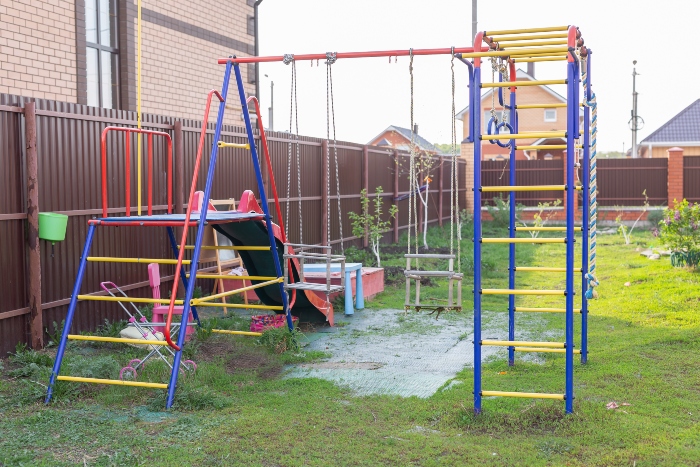
Playground equipment needs to remain stable when children climb or swing on it. Otherwise, the movement created during normal use may cause an improperly installed structure to tip.
Manufacturers provide installation instructions explaining how to anchor their equipment securely. These requirements depend on the structure’s design and the ground beneath it, so you’ll want to follow the instructions rather than improvising an anchoring method.
After installation, periodically examine the structure for loose connections. Repeated movement may gradually loosen hardware, even when the equipment was originally installed correctly.
Provide Shade During Hot Weather
Direct sunlight can make backyard play areas uncomfortable during warmer months. Certain playground surfaces absorb heat throughout the day, creating potential burn hazards for children.
Metal slides are especially concerning because their surfaces may become dangerously hot after prolonged exposure to sunlight.
A shade structure reduces direct sunlight exposure and provides a more comfortable environment for outdoor activities. However, its placement should account for how sunlight moves across the yard throughout the day.
Even with shade nearby, always test exposed playground surfaces before allowing children to use them during hot weather.
Remove Dangerous Plants
Decorative landscaping isn’t always suitable for areas where young children play. Some ornamental plants contain toxic substances that cause illness when swallowed.
Before allowing children to play near landscaped areas, identify the plants growing there. Poisonous species should be removed or separated from the play area so younger children can’t reach them.
Plants with sharp thorns pose another hazard because their branches may cause injuries during active play. Relocating these plants away from recreational spaces reduces the risk of accidental contact.
Restrict Access to Backyard Ponds
Backyard ponds create drowning hazards for young children, even when the water appears shallow. A slippery pond edge may cause a child to fall unexpectedly, especially when they’re concentrating on something nearby.
If your property contains a decorative pond, establish a secure barrier that prevents children from reaching it independently. The barrier should surround the water rather than simply separate it from one section of the yard.
When effective separation isn’t possible, removing the water feature may be the safest option. Remember that adult supervision remains necessary whenever children spend time near water.
Address Insect Problems Around the Yard
Insects are a normal part of spending time outdoors. However, certain backyard conditions encourage unwanted insect activity near children’s play areas.
Standing water attracts mosquitoes because they use it for breeding. Even small amounts of accumulated rainwater provide suitable conditions for mosquito development, so emptying containers after rainfall reduces potential breeding sites.
Meanwhile, wasp nests near playground equipment create a different concern. Children may accidentally disturb a nest while climbing or reaching beneath a structure.
If you discover an active nest, keep children away from the affected area until it’s safely addressed.
Create Separate Spaces for Different Ages
Children develop new physical abilities as they grow, so equipment appropriate for an older child may present unnecessary risks for a younger sibling.
For example, a toddler attempting to climb a structure designed for school-aged children may struggle to maintain their balance. Younger children sometimes imitate their siblings without recognizing their own limitations.
If space allows, establish separate activity areas with equipment suited to each child’s developmental stage. This arrangement gives younger children opportunities to play independently while older siblings enjoy more challenging activities.
Adult supervision remains necessary, especially when children of different ages play together.
Inspect Slippery Surfaces After Rain
Rain changes the condition of outdoor surfaces, sometimes making previously safe areas slippery. Wooden playground steps are especially vulnerable because accumulated moisture reduces traction.
Children climbing these steps may lose their footing unexpectedly, even when they’ve used the same equipment safely before.
After heavy rainfall, examine surfaces where children place their feet before allowing them to resume play. Some materials require additional drying time after surrounding areas have dried.
Persistent puddles may indicate drainage problems beneath the playground. Addressing these areas prevents water from repeatedly collecting where children run or climb.
Check Outdoor Equipment for Damage
Outdoor playground equipment experiences continuous exposure to changing weather conditions. Over time, moisture may weaken certain materials and create hazards that weren’t present during installation.
Wooden structures require regular inspections because repeated moisture exposure can eventually cause rot. Pay special notice to support posts near ground level, where damp conditions may contribute to deterioration.
If you discover soft or rotting wood, the affected components need replacement before children use the structure again. Periodic inspections allow you to identify damage before it compromises the equipment’s stability.
Give Your Kids Room to Enjoy the Outdoors
Creating a safe outdoor play area gives your children a space where they can enjoy their favorite activities while you reduce preventable hazards.
Once you’ve prepared the backyard, encourage your kids to explore their surroundings and develop confidence through age-appropriate play. You’ll still need to supervise their activities, but you won’t have to worry about every uneven patch of ground or forgotten gardening tool.
Most importantly, your outdoor space should be somewhere your family enjoys spending time together. But don’t forget to create a safe outdoor play area for your kids.