15 Activities for Twins at Home That Work
Some days, having twins at home feels like a sweet little miracle. Other days, it feels like you are running a snack bar, a referee station, and a preschool classroom at the same time. If you are looking for activities for twins at home that are realistic, low-prep, and actually hold their attention for more than five minutes, you are not alone.
The biggest challenge with twins is that they often want the same thing at the same time, but not always in the same way. One child may want to lead while the other hangs back. One may be ready for a bigger challenge while the other still wants repetition. That is why the best at-home activities do not just fill time. They give both kids room to participate without turning every moment into a competition.

What Makes Activities for Twins at Home Actually Work?
The sweet spot is an activity that is easy to set up, flexible enough for two personalities, and open-ended enough that both children can enjoy it at their own pace. Twins do not always want to share every part of the experience, even when they like doing the same general activity side by side.
It helps to think in pairs without forcing sameness. Two trays instead of one. Two paintbrushes in different sizes. One big blanket fort with separate jobs. That small shift can prevent a lot of frustration before it starts.
Another thing that matters is energy level. There are times for messy play and times for quiet play. There are moments when your twins need to burn energy in the living room, and other moments when everyone needs to reset. A good home routine usually includes both.
Creative Play Ideas That Keep Both Twins Engaged
Art works well for many sets of twins because it allows togetherness without requiring constant sharing. Try setting up a simple art station with washable markers, paper, stickers, and tape. Instead of telling them exactly what to make, give a loose idea like drawing a zoo, making birthday cards, or designing a pretend restaurant menu. That keeps the pressure low and leaves room for different skill levels.
Playdough is another strong option because it can go in a dozen directions. One twin might make animals while the other rolls out pretend cookies. If arguments start over tools, everyday kitchen items like plastic cups, dull butter knives, and cookie cutters can help expand the setup without much effort.
Painter’s tape can save an afternoon. Use it to make roads on the floor for toy cars, shape a hopscotch path in the hallway, or mark off a pretend town with houses and stores. This works especially well for preschool and early elementary ages because it invites movement and imagination at the same time.
If your twins like pretend play, create a simple theme and let them run with it. A grocery store, doctor office, animal rescue, or bakery can all be built from things you already have. You do not need a picture-perfect setup. A laundry basket becomes a shopping cart, stuffed animals become patients, and a few cans from the pantry become store inventory.
Movement-based Activities for Twins at Home
When the noise level is rising and everyone is getting touchy, movement usually helps. You do not need a giant playroom to make it happen. A basic obstacle course using couch cushions, masking tape lines, tunnels made from chairs and blankets, and a basket to toss soft balls into can go a long way.
The key with twins is to make it repeatable without making it competitive every single time. Sometimes racing is fun. Sometimes it ends in tears. You can alternate between taking turns, going together, or giving each child a different mission, like one balances a beanbag while the other crawls under the table.
Dance breaks are another easy reset. Put on a few songs and call out silly directions like freeze, spin, march, tiptoe, or jump like a frog. If one child loves performing and the other does not, make it less about watching and more about copying movements or playing follow-the-leader.
Balloon games are surprisingly useful indoors because they slow things down just enough. See how long they can keep a balloon off the floor, pass it back and forth, or guide it through a simple tape path. It feels active without being too wild for the house.
Quiet-time Activities When Everyone Needs a Reset
Not every part of the day needs to be high energy. In fact, twins often do better when there is a predictable quiet stretch built in. This does not have to mean full silence or independent play for an hour. It can just be a calmer activity that gives everyone a breather.
Audiobooks or read-aloud time work well here. Give each child a blanket, a few stuffed animals, and something small to do with their hands, like coloring or magnetic tiles. Listening together can create connection without asking them to negotiate every detail of play.
Puzzles can also be a good fit, but it depends on the pair. Some twins naturally collaborate, while others get possessive about pieces. If that sounds familiar, try giving them separate mini puzzles side by side, or assign simple roles on a larger one, like one child sorts edge pieces while the other looks for colors.
Sensory bins can be calming too, especially if you keep them simple. Dry rice, pom-poms, scoops, cups, and small toys are often enough. If your twins tend to fight over materials, use two shallow bins or divide one large bin down the middle with containers inside it.

Learning Activities That Do Not Feel Like School
A lot of parents want activities that are fun but still worthwhile, especially if the day feels long. The good news is that home learning does not need to look formal to be meaningful.
Baking is a great example. Measuring, pouring, taking turns, and following steps all build real skills. For twins, it helps to divide jobs clearly. One can stir while the other adds ingredients, then switch at the next step. That simple structure cuts down on the usual battle over who gets to do the fun part.
Scavenger hunts are another favorite because they can be adjusted for almost any age. Ask them to find something red, something soft, something that starts with B, or three things that belong in the kitchen. Younger twins can do picture-based hunts, while older ones can solve simple clues.
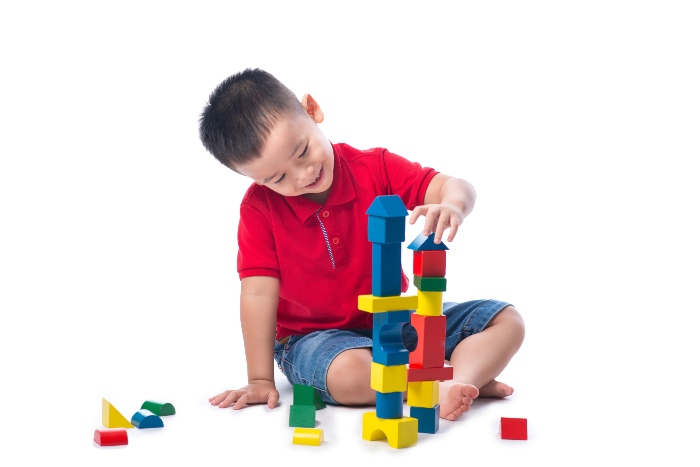
Building challenges with blocks, magnetic tiles, or recycled boxes add a little problem-solving without feeling forced. Give them a prompt like build a bridge for toy animals or make a tower taller than a pillow. If they work well together, let it be a team challenge. If they do better with space, give them the same prompt and separate materials.
When Twins Need Together Time and Separate Time
This is where a lot of home days get tricky. Parents of twins often hear how special the bond is, and it is. But even close twins do not want to do everything as a unit. Sometimes the best activity is not one shared experience. It is two parallel ones.
If one twin wants crafts and the other wants cars, set them up near each other instead of forcing one plan. If one child needs more one-on-one attention, rotate in ten-minute turns while the other does a familiar activity. It does not have to be perfectly equal every second to still feel fair overall.
This matters even more as twins get older and their interests separate. Activities for twins at home should support their bond, but they should also leave room for independence. That balance can reduce sibling tension and help each child feel seen for who they are, not just as half of a pair.
A Simple Rhythm for Hard Days at Home
When the day starts to unravel, it can help to stop chasing the perfect activity and just shift the rhythm. Try alternating active play, snack, quiet play, and a helper task like sorting socks or wiping the table. Twins often respond well when the day has a little shape, even if it is loose.
Helper tasks are underrated, by the way. Matching socks, putting fruit in a bowl, feeding a pet, or organizing books can all feel surprisingly satisfying to young kids. For twins, these tasks also offer a natural way to work side by side without the pressure of entertaining each other.
And if an activity only lasts eight minutes before someone melts down, that still counts. Home life with twins is rarely neat. A good activity is not one that creates a perfect afternoon. It is one that buys you a calmer stretch, gives your kids something meaningful to do, and helps the house feel a little less chaotic.
You do not need an elaborate craft closet or a color-coded schedule to make home days go better. Most of the time, the best activities are the ones you can pull together quickly, repeat often, and adapt to the two very real little people in front of you.