A Parent’s Guide to Playground Safety
The fastest way for a fun park stop to turn stressful is hearing that sudden cry after a child takes a tumble. Most playground bumps are minor, and kids need room to climb, run, test their balance, and build confidence. Still, a little preparation goes a long way. This guide to playground safety helps you focus on the risks that matter without hovering over every step your child takes.

Start With a Quick Playground Scan
Before backpacks hit the ground and everyone races for the swings, take 60 seconds to look around. You do not need to inspect the park like a professional safety auditor. You are simply checking for the obvious issues that can turn normal play into an avoidable injury.
Look at the surface first. Loose-fill materials such as wood chips, mulch, or rubber should be deep enough to cushion falls and spread evenly under climbing structures, slides, and swings. Hard-packed dirt, concrete, exposed tree roots, and thin patches of mulch deserve extra caution. A fall from even a low platform can hurt more than parents expect when the landing area is unforgiving.
Then check the equipment itself. Watch for broken chains, loose bolts, cracked plastic, sharp edges, splintering wood, rust, or open spaces where a child’s head, arm, or clothing could get caught. If something looks damaged, steer your child elsewhere and report it to the park, school, or property manager when possible. You do not have to solve the problem yourself to help protect the next family.
In North Texas, heat deserves its own quick check. Metal slides, handrails, and dark rubber surfaces can become painfully hot long before the air temperature feels unbearable. Touch the surface with the back of your hand before letting a child climb on it. If it is too hot for you to hold comfortably, it is too hot for little hands and legs.
As you scan the playground for deficiencies, keep our guide to playground safety in mind.
Match the Playground to Your Child
A playground may have a posted age range, and it is worth paying attention to it. Equipment designed for preschoolers usually has lower platforms, smaller climbing challenges, and shorter slides. Bigger structures can be exciting for a confident kindergartner, but they may also have wider gaps, faster slides, and higher fall distances.
Age is only part of the picture. A cautious 7-year-old and a fearless 4-year-old may need different levels of support. Consider your child’s coordination, impulse control, comfort with heights, and ability to understand rules. It is okay to say, “That part is for when you are a little bigger,” even if your child is frustrated. It is also okay to stay close while they try something new rather than immediately ruling it out.
When siblings are different ages, create separate plans instead of expecting the older child to supervise the younger one. Your big kid deserves freedom to play, and your little one needs an adult whose attention is not divided during the trickiest moments. Some playgrounds are geared towards the older kids, leaving much to be desired for the little ones. Choose your playground wisely for your kids’ age group, and keep our guide to playground safety in mind as you choose a place to play.
Supervise Without Taking Over
Playground supervision is not about preventing every scrape. It is about being available before a small problem becomes a big one. Put the phone away or save it for quick check-ins, especially around climbing structures, swings, and crowded play areas. A conversation with another parent can wait when your toddler is figuring out a ladder for the first time.
Stay close enough to reach young children quickly, particularly near elevated platforms and stairs. For older children, position yourself where you can see the areas they are using. If the playground has tunnels, tall structures, or separate zones, agree on boundaries before they begin. A simple “You can play from the swings to the big slide, but stay where I can see you” is much clearer than repeatedly calling their name across the park.
Crowds change the level of risk. A busy playground can mean children running in front of swings, bigger kids moving quickly through toddler spaces, and more opportunities for accidental collisions. If the equipment is packed, help your child wait for a turn, choose a less crowded area, or come back later if the energy feels too wild.
Teach Simple Rules They Can Actually Remember
Long safety speeches rarely survive the walk from the car to the slide. Give children a few clear rules and repeat them often enough that they become part of playtime. The goal is not to make the playground feel scary. It is to help kids learn how to notice their own surroundings.
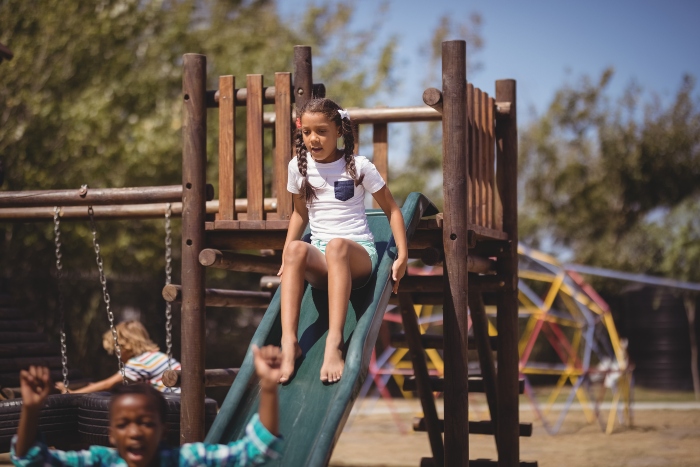
You can explain that slides are for going down feet first, one person at a time. Climbers and ladders are for hands and feet, not racing or pushing. Swings need a wide “no-run zone” in front of and behind them. Teach children to sit on swings rather than stand or twist around, and remind them to hold on until the swing slows down.
For younger children, turn these rules into quick phrases: “Feet first,” “Wait your turn,” and “Watch for swings.” For school-age kids, explain the reason behind the rule. They are more likely to cooperate when they understand that walking in front of a moving swing can lead to a hard hit, not just another reminder from Mom or Dad.
Teach respectful play, too. No pushing, grabbing, throwing sand, or crowding someone who is climbing. Kids will not get it right every time, especially when they are excited. Calm, immediate corrections work better than yelling from across the playground.
Dress for Safe, Comfortable Play
The clothes your child wears can make play easier or riskier. Closed-toe shoes with secure soles are usually the best option for climbing, running, and navigating mulch. Flip-flops can slip off on ladders, and bare feet are vulnerable to hot surfaces, splinters, and hidden debris.
Avoid clothing with drawstrings, long scarves, loose necklaces, or dangling accessories that can catch on equipment. A bike helmet should come off before playground play because the straps can become a snagging hazard on bars or openings. This can feel counterintuitive when you are used to teaching helmet safety, but playground equipment calls for a different rule.
Bring water, sunscreen, and a simple first-aid kit for longer outings. On hot days, take shade breaks before kids are sweaty, cranky, and unwilling to stop. A snack and a water bottle can prevent the kind of meltdown that makes everyone less careful.
Know When a Fall Needs More Than a Hug
Most falls call for comfort, a quick look, and a few quiet minutes. Clean small scrapes, use a cold pack for a minor bump or bruise, and let your child decide when they are ready to return to play. But trust your instincts when something seems off.
Seek medical care promptly for a child who loses consciousness, has trouble breathing, experiences repeated vomiting, has a seizure, cannot use a limb normally, has severe or worsening pain, or shows unusual confusion or behavior after a head injury. Also get help for deep cuts, uncontrolled bleeding, or a possible broken bone. If you are unsure, it is always reasonable to call your child’s pediatrician or seek urgent guidance.
After a scary fall, your child may be nervous about climbing again. Do not force them back onto the equipment to prove they are fine. Start small the next time – a low step, a short slide, or a familiar swing – and let confidence return at their pace.
Make Safety Part of the Routine
The best playground habits are the ones that become automatic. Do the quick equipment scan, talk through the boundaries, check hot surfaces, and stay present during higher-risk play. It takes only a few minutes, but it gives kids the freedom to do what playgrounds are meant for: move their bodies, make friends, take manageable risks, and come home happily worn out. This guide to playground safety is just a glimpse of what could go wrong on the playground. Keep an eye on your child and let them have fun!