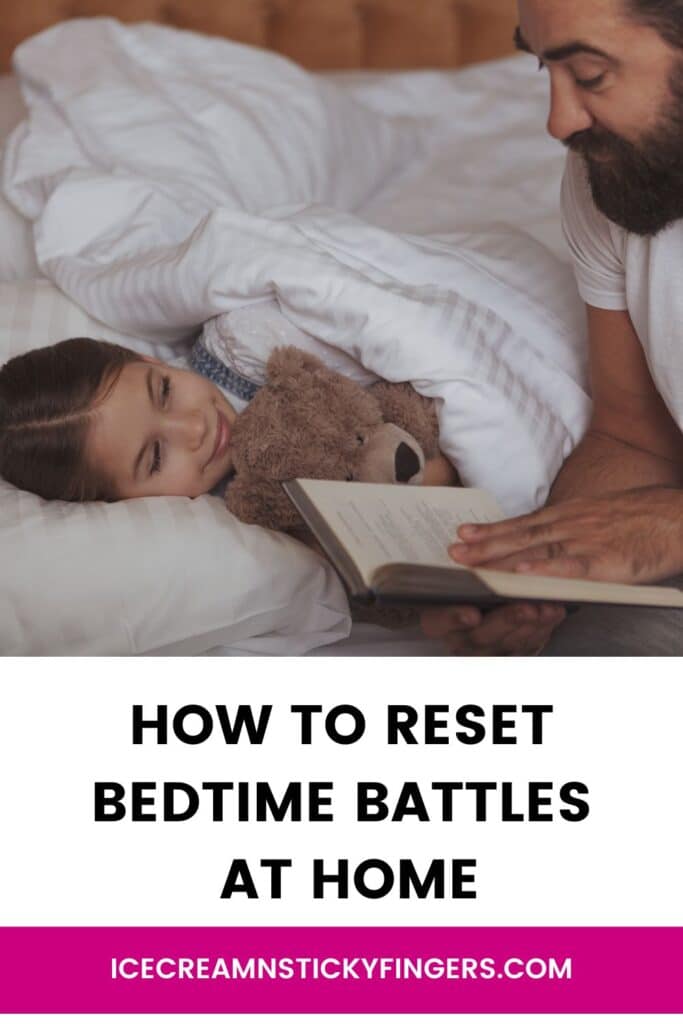
How to Reset Bedtime Battles at Home
If your evenings start with good intentions and end with one more drink, one more hug, one more meltdown, you are not alone. Figuring out how to reset bedtime battles usually starts when parents realize the current routine is wearing everyone out – and that forcing it harder is only making things worse.

Bedtime struggles can sneak up on families. A routine that worked for months suddenly falls apart after a school change, a vacation, a new sibling, a growth spurt, or just a season of tired, overstretched parenting. Sometimes the problem is not that your child refuses sleep. It is that bedtime has become the place where they finally let all their feelings out.
The good news is that bedtime can be reset. Not perfectly. Not overnight for every child. But with a few consistent changes, you can make evenings feel calmer and more predictable again. Let’s take a look at how to reset bedtime battles at home.
Why Bedtime Battles Happen in the First Place
Most bedtime battles are not really about pajamas or brushing teeth. They are usually about connection, control, overtiredness, or a routine that no longer matches your child’s age and needs.
Young kids often resist bedtime because they do not want to be separated. After a busy day, bedtime is the moment they slow down enough to notice they miss you, feel anxious, or want a little more attention. Other kids push back because bedtime is the one part of the day they feel they can control. If they cannot choose much else, they may choose not to put on pajamas.
Then there is overtiredness, which can make bedtime look a lot like bad behavior. An overtired child may get silly, hyper, emotional, or extra defiant. Parents understandably think, They are clearly not tired. But that second wind is often a sign they missed it.
Sometimes the routine itself has drifted. Maybe it has become too long, too stimulating, or too dependent on your presence. If your child now needs 45 minutes of negotiating, singing, repositioning stuffed animals, and lying beside them to fall asleep, bedtime is doing too much work.
How to Reset Bedtime Battles Without Making Nights Worse
A reset works best when you stop trying to fix every bedtime issue at once. Pick a clear, simple plan and stick with it for at least a week before deciding it failed.
Start by looking at the full evening, not just the final 10 minutes. Kids do better at bedtime when the hour before bed feels predictable. If they are running around, snacking randomly, watching fast-paced screens, and getting five different warnings, their bodies and brains are not getting the signal to slow down.
A strong bedtime reset usually includes an earlier start, fewer transitions, and a routine your child can learn by heart. That might sound basic, but basic is what helps when everyone is tired.
Tighten the Routine, But Keep it Realistic
Think of bedtime like a short script. Bath, pajamas, brush teeth, two books, hugs, lights out. Or maybe no bath every night if that turns into a fight. The goal is not a Pinterest-perfect routine. The goal is a routine you can actually repeat.
If your current routine takes an hour, trim it down. Long bedtimes often invite more stalling. A child who gets one more story, one more song, and one more trip to the bathroom learns that bedtime is flexible. That does not make them manipulative. It just means they are smart and tired.
Visual routines can help preschoolers and younger elementary kids. A simple chart with pictures gives them something to follow besides your voice. That lowers power struggles because you are no longer inventing the next step on the fly.
Move Bedtime Earlier if Your Child is Melting Down
This part surprises a lot of parents. If bedtime has become chaotic, a later bedtime does not always help. Many kids who fight sleep are actually too tired by the time they get there.
Try moving bedtime 15 to 30 minutes earlier for several nights and watch what happens. If your child falls asleep faster and has fewer meltdowns, overtiredness was probably part of the problem. If they spend that extra time bouncing off the walls, the issue may be more about routine or boundaries. ther naps are still in the picture. But when bedtime has become a nightly showdown, earlier is often worth testing.

Set Calm Limits and Mean Them
This is the hard part, especially if you are exhausted and just want everyone asleep. But if you want to know how to reset bedtime battles, consistency matters more than the perfect script.
Once the routine is over, decide what happens next. Maybe it is one quick check-in after five minutes. Maybe it is a phrase you repeat every night: “It’s time for sleep. I’ll see you in the morning.” Maybe it is returning your child to bed with very little discussion. What matters is that the response stays calm and boring. You don’t want to be engaging and prolong the bedtime process.
When parents switch between strict, lenient, frustrated, and guilty from one night to the next, kids keep testing because the rules keep changing. A steady response feels safer, even if your child protests at first.
That does not mean being cold. You can be warm and firm at the same time. “I know you want me to stay longer. Bedtime is hard tonight. I’m still going to tuck you in and say goodnight.” That kind of response validates the feeling without reopening the negotiation.
Watch for Accidental Rewards
Sometimes bedtime battles grow because the payoff is strong. Extra one-on-one time, a parent lying beside them, special snacks, another show, getting carried to your bed – all of those can keep the cycle going.
This does not mean you caused the problem. Parents do what works in the moment, especially during stressful seasons. But if you are resetting bedtime, it helps to notice what your child may now expect in order to fall asleep.
If you want to change that, do it gradually when needed. For example, if you currently lie beside your child until they fall asleep, you might move to sitting next to the bed, then sitting farther away, then checking in briefly. A slower shift can be easier than a sudden cutoff, especially for anxious kids.
If your Child Gets Out of Bed 10 Times
This is where many parents break, and honestly, that makes sense. Repeated bedtime exits are frustrating.
Keep your response short. Walk them back, tuck them in, and say the same thing each time. Avoid lectures, bargaining, or big emotional reactions. Attention can stretch the pattern out, even when it is negative attention.
For some children, a bedtime pass works well. They get one pass for a drink, one extra hug, or one bathroom trip. After they use it, bedtime is done. This works best for kids who like concrete rules and are old enough to understand the deal.
If your child is leaving bed because of real fear without turning bedtime into a two-hour event. A night-light, a comfort item, calming music, or a few minutes talking about worries earlier in the evening can help.
How to Reset Bedtime Battles After a Life Change
Big changes can blow up sleep even in kids who used to go down easily. Starting school, dropping naps, moving, family stress, illness, travel, and sleep regressions can all show up at bedtime first.
In those moments, the answer is usually not more pressure. It is more predictability. Go back to basics. Keep the routine simple. Add a little more connection before bed, like 10 minutes of focused play or talking. Children often cooperate better when they do not feel like bedtime is the only chance to get you.
This is especially true for kids who save their hardest behavior for home. If they have held it together all day at school or daycare, bedtime may be where everything spills out. That is not fun, but it is useful information. Sometimes what looks like bedtime defiance is really end-of-day emotional overload.
When the Problem Might be Bigger Than Routine
Not every bedtime battle is solved by a chart and an earlier lights-out. If your child snores heavily, has frequent nightmares, seems unusually anxious, wakes often, or is constantly exhausted during the day, it may be worth talking with your pediatrician.
The same goes if bedtime has become extreme enough that it is affecting the whole household for weeks at a time. Sleep issues can overlap with anxiety, sensory challenges, ADHD, and medical concerns. Getting support is not overreacting. It is parenting.
If you are in the middle of this right now, try not to measure success by whether tonight is perfectly peaceful. A better goal is fewer battles, shorter battles, and a routine that feels more manageable than it did last week. Follow our advice on how to reset bedtime battles at home and try to make bed time easier.
That is often how real progress looks in family life – not dramatic, just steadier. And on hard nights, steadier is plenty.
What did you learn when it comes to how to reset bedtime battles at home?