11 Kids Bedroom Design Ideas That Work
If your child’s room feels like a place where laundry, toys, books, and bedtime battles all happen at once, you are not alone. The best kids bedroom design ideas are not about creating a picture-perfect space. They are about making the room easier to live in for your child and easier to manage for you.
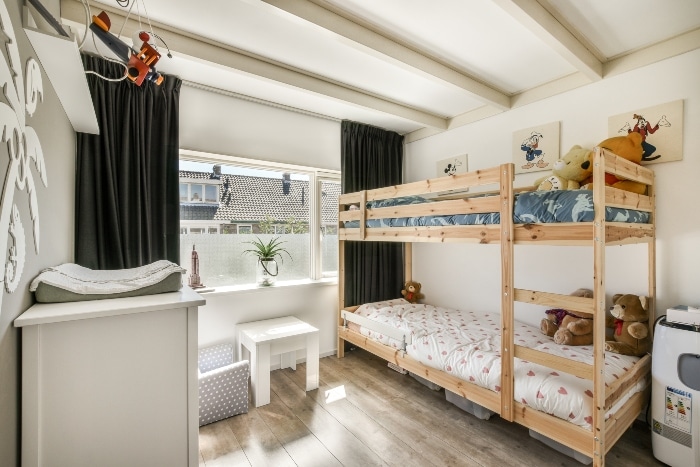
A kid’s bedroom has to do a lot. It might be a sleep space, play zone, reading corner, homework spot, and storage area all in one. That is why the smartest design choices usually start with function, then build in personality after that. When a room works with your child’s age, habits, and daily routine, it tends to stay calmer and more useful.
Kids Bedroom Design Ideas Should Start with Real Life
Before you pick paint, wallpaper, or a new bed frame, think about how the room gets used on a regular Tuesday. Is your preschooler dumping every bin to find one stuffed animal? Is your early elementary child starting to need a desk but still playing on the floor? Is the shared bedroom situation causing constant clutter creep?
Those details matter more than trends. A beautiful room that does not support your child’s actual routine will frustrate everyone. Start by noticing what is not working. Maybe there is nowhere for books to go, clothes pile up because the dresser is too tall, or bedtime gets derailed because the room feels overstimulating. Once you know the problem, the design decisions get easier.
Use Zones, Even in a Small Bedroom
One of the most helpful kids bedroom design ideas is to divide the room into simple zones. That does not mean you need a huge space. Even a small bedroom can feel more organized when each area has a purpose.
Try to keep the bed area visually calm. If possible, avoid crowding it with too many toys or bright distractions right next to the pillow. Then give play items one clear home, whether that is a shelf, a corner with baskets, or under-bed storage. If your child is school-aged, carve out a small homework or drawing area with a kid-sized table or desk.
This matters because kids respond well to visual cues. When the room quietly tells them where to sleep, where to play, and where to put things away, cleanup and transitions tend to go a little smoother. Not perfectly, of course, but smoother.
Keep the Sleep Zone Simple
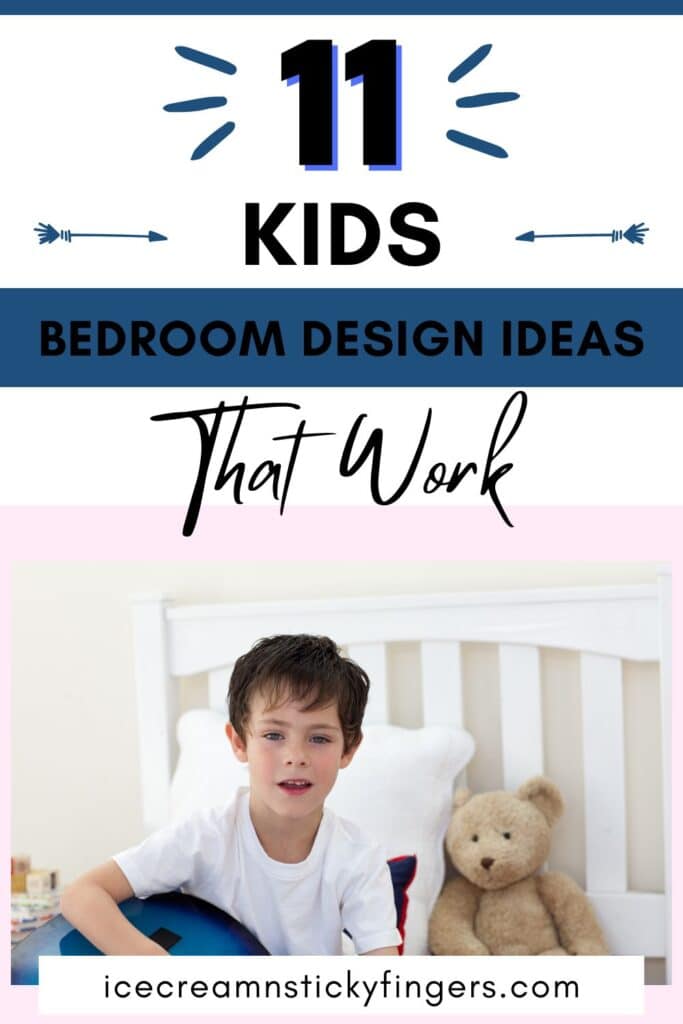
A calm sleep area can make a real difference at bedtime. Soft bedding, a few favorite stuffed animals, and lighting that feels warm instead of harsh usually work better than lots of bold decor around the bed.
If your child loves themed rooms, you do not have to avoid them. Just keep the most energetic patterns and colors away from the sleep area if bedtime is already tricky. A room can still feel fun without making it harder to wind down.
Give Toys a Contained Home
Open floor space disappears fast when toys do not have limits. Bins, baskets, cube storage, and low shelves all help, but the key is choosing options your child can actually use. If lids are hard to open or the shelves are too high, you will probably be the one doing all the cleanup.
Fewer, larger categories often work better than overly detailed systems. Think cars, dolls, art supplies, blocks. Not 25 tiny labels that no one follows after day three.
Choose Furniture Your Child Can Grow Into
Parents know how fast kids outgrow things, so it helps to buy furniture with some staying power. That does not mean the room has to feel serious or grown-up. It just means picking core pieces that can adapt.
A simple bed frame, neutral dresser, and sturdy bookshelf can last for years while the room’s personality changes through bedding, wall art, and accessories. This is often a better investment than leaning too hard into furniture shaped like race cars or castles unless you truly want a short-term look.
There is always a trade-off here. Character furniture can be magical for a season, and sometimes that joy is worth it. But if budget matters, it is usually smarter to keep big-ticket items versatile and let the theme come through in smaller, easier-to-swap details.
Think Low and Reachable
A lot of bedroom frustration comes from kids being expected to maintain spaces designed for adults. Hooks are too high. Drawers are too deep. Shelves hold things they are not allowed to touch. Then we wonder why nothing gets put away.
Bring the room down to their level. Use low book ledges, child-height hooks, bins without complicated tops, and a laundry basket they can actually reach. If you want more independence, the design needs to support it.
This approach also helps with morning routines. A child who can reach pajamas, socks, and tomorrow’s clothes is more likely to participate instead of waiting for help with every step.
Pick a Color Palette That Gives you Breathing Room
When parents search for kids bedroom design ideas, color is usually one of the first things they think about. It is also one of the easiest places to overdo it.
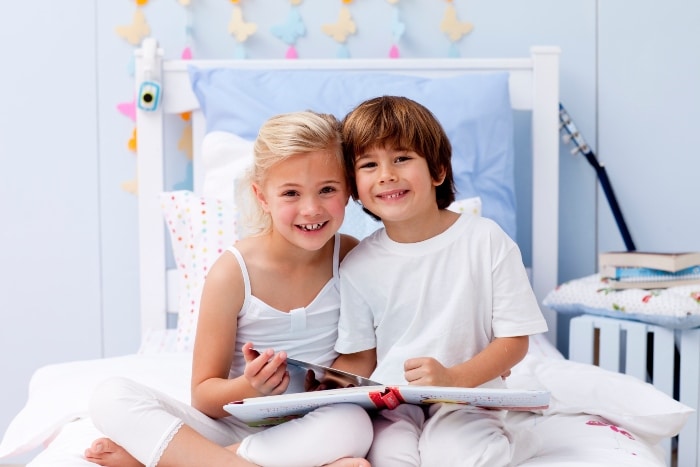
You do not have to stick with beige or white to make a room feel peaceful. Soft greens, dusty blue, warm peach, muted yellow, and gentle lavender can all feel playful without becoming visually chaotic. If your child wants brighter colors, use them in accents like pillows, rugs, wall prints, or one painted piece of furniture.
This is especially helpful in smaller rooms where a lot of bold color can start to feel busy fast. If your child is very sensitive to stimulation or bedtime is a struggle, calmer wall colors are often worth it.
Let Personality Show Up in Easy-to-change Ways
Wall decals, framed art, colorful bedding, a fun lamp, or a themed rug can all bring the room to life without locking you into a full redesign next year. Kids’ interests change quickly. Today it is dinosaurs, next year it might be space, dance, or Taylor Swift-inspired sparkle.
Flexible decor lets the room grow with them while keeping costs more manageable.
Make Storage Part of the Design, Not an Afterthought
Storage is where many cute rooms fall apart in real life. If the room looks nice for a photo but has nowhere for everyday stuff to go, it will not stay functional for long.
Good storage does not have to mean hidden everything. In fact, some visible storage is easier for kids to use. Open shelves for favorite books, baskets for stuffed animals, and labeled bins for toys can make the room feel lived-in in a good way.
Under-bed drawers are especially helpful in smaller bedrooms. So are over-the-door organizers for shoes, hair accessories, small toys, or art supplies. If closet space is limited, double hanging rods or extra bins on the closet floor can make a big difference.
For shared rooms, individual storage is key. Each child needs a clear spot for their own clothes, treasures, and bedtime essentials. Without that, even a well-designed room can start to feel like one long argument.
Add One Cozy Feature
Not every room needs a dramatic statement piece, but one cozy feature can make the space feel special. That might be a canopy over the bed, a reading nook with floor pillows, twinkle lights around a bookshelf, or a bean bag in the corner.
This is often the part kids remember most. It gives them a sense that the room belongs to them, not just that it stores their stuff. And for parents, it can encourage quiet time, reading, or independent play, which is never a bad thing.
At Ice Cream n Sticky Fingers, we know parents are usually balancing budget, function, and what their child is begging for all at once. A little charm goes a long way when the basics are already working.
Plan for Mess Without Giving Up
A well-designed kid’s room will still get messy. That is normal. The goal is not perfection. The goal is making it easier to reset.
That might mean leaving some open floor space so cleanup feels possible, limiting how many toys stay in the bedroom, or rotating items so everything is not out at once. It can also mean accepting that some systems look best in theory but do not fit your family.
If your child throws every tiny toy into one big basket but actually uses that basket, that may be better than an elaborate organizing setup that never lasts. The best kids bedroom design ideas are the ones your family can keep up with.
Design for the Child you Have
It is easy to build a room around an ideal version of childhood, but what helps most is designing for the child in front of you. A very active child may need more open space and fewer breakables. A child who loves books may benefit more from front-facing shelves than extra toy storage. A sensory-sensitive child may do better with softer textures, lower lighting, and less visual clutter.
You do not need a showroom bedroom to create a room that your child feels good in. You just need a space that supports sleep, play, and the everyday rhythms of family life. Start with what is hard, make one or two smart changes, and let the room come together from there. That kind of progress tends to last longer than perfection ever does.