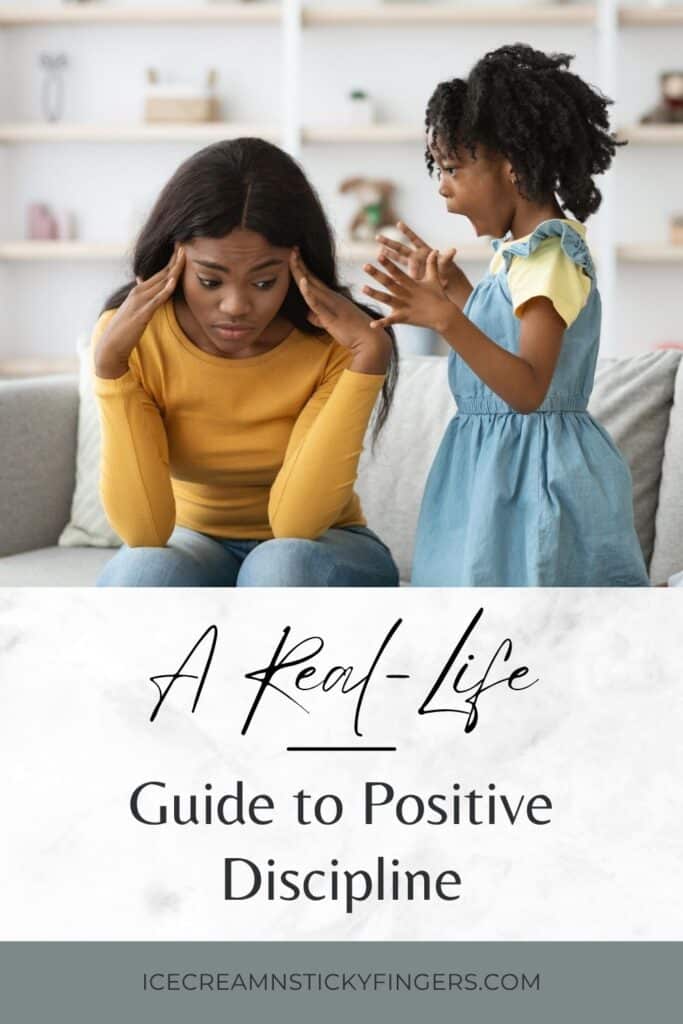
A Real-Life Guide to Positive Discipline
You tell your child to put on shoes, and somehow that simple moment turns into tears, stalling, and a full-blown power struggle by the front door. If that sounds familiar, this guide to positive discipline is for you. Not because it promises perfectly behaved kids, but because it gives you a calmer, more useful way to respond when family life gets messy. Let’s take a look at a real-life guide to positive discipline.

Positive discipline is often misunderstood as being too soft or letting kids do whatever they want. It is neither. At its core, it means teaching instead of punishing, setting firm boundaries without shame, and helping children build skills they do not have yet. That matters because so much of what we call bad behavior is really a child struggling with frustration, impulse control, disappointment, hunger, fatigue, or a need for connection.
For busy parents, this approach can feel harder at first. Yelling is fast. Threats can get immediate compliance. But those tools usually wear out quickly, and they often leave everyone feeling worse. Positive discipline asks a different question: What is my child learning from this moment? If the answer is only fear, resentment, or how to avoid getting caught, the strategy probably is not helping in the long run. But if you using this guide to positive disciple, you will be on your way to use mistakes as learning toosl
What Positive Discipline Actually Looks Like
A practical guide to positive discipline starts with one important shift. The goal is not to control every behavior. The goal is to teach your child how to behave, recover, communicate, and make better choices over time.
That means you can be kind and firm at the same time. You can hold a boundary without a lecture. You can validate feelings without giving in. A child can be upset that screen time is over, and the answer can still be no.
In real life, positive discipline often sounds like this: “You’re mad that it’s time to leave. I get it. We’re leaving now, and I’ll help you to the car.” It is calm, clear, and not very dramatic. That last part matters. A lot of discipline struggles grow bigger because adults get pulled into arguing, overexplaining, or reacting emotionally.
Why This Approach Works for Young Kids
Young children are still learning skills that many adults expect them to already have. Waiting, sharing, stopping an activity they enjoy, and using respectful words when upset are all learned behaviors. Even elementary-age kids need repetition, support, and realistic expectations.
Positive discipline works because it focuses on teaching those skills in the moment and over time. Instead of asking, “How do I make this stop right now?” you start asking, “What does my child need to learn here?” Sometimes the answer is emotional regulation. Sometimes it is following through on a routine. Sometimes it is simply sleep and a snack.
That does not mean every behavior gets a gentle pass. Hitting, biting, screaming at siblings, and destroying property still need a response. The difference is that the response is tied to teaching and repair, not humiliation.
The Building Blocks of a Guide to Positive Discipline
If you want this approach to work at home, start with a few basics and keep them boringly consistent.
Clear Expectations Beat Repeated Warnings
Kids do better when they know what is expected before a problem starts. That means simple, specific directions instead of vague requests. “Walk in the store and keep your hands to yourself” works better than “Be good.” “Toys stay in the playroom” works better than “Stop making a mess.”
It also helps to say less. When children are already upset or distracted, long explanations usually add fuel. One clear direction, followed by follow-through, is often more effective than five escalating warnings.
Connection Helps Cooperation
This is the part many parents skip because life is busy. But children are much more likely to respond well when they feel connected. A hand on the shoulder, eye contact, using a calm voice, or getting down to their level can change the whole tone of an interaction.
Connection does not erase limits. It just makes limits easier to accept. When a child feels seen, they are less likely to keep pushing just to get your attention.
Consequences Should Make Sense
Positive discipline uses consequences, but not random punishments. A consequence works best when it is related to the behavior. If a child throws a toy, the toy gets put away. If they color on the wall, they help clean it. If they refuse to wear a coat after a reasonable reminder, they may feel cold for a moment and learn from that natural result.
This is where some flexibility matters. Not every natural consequence is safe or appropriate. You would not let a child run into a parking lot to learn a lesson. Safety always comes first.
Calm Matters More Than the Perfect Script
Parents put a lot of pressure on themselves to say exactly the right thing. What helps most is not a perfect phrase. It is your regulation. If your voice is steady and your response is predictable, your child learns that hard moments can be handled without chaos.
Of course, staying calm is easier said than done. If you are already overloaded, positive discipline may feel impossible by 6:30 p.m. on a weekday. That does not mean you are failing. It means your family probably needs more support around routines, transitions, rest, or your own reset time.

What to Do In Common Parenting Moments
The hardest part is usually not understanding the idea. It is knowing what to do when your child is melting down in the grocery store or smacking a sibling with a pool noodle.
When your child has a tantrum, start by reducing stimulation and keeping the boundary. You do not need to reason through the meltdown in the middle of it. Stay nearby, keep everyone safe, and use a few calm words. Afterward, when your child is regulated, that is the time to teach.
When your child refuses a routine like bedtime or getting dressed, look for the skill gap or friction point. Is the routine too rushed? Too open-ended? Too boring? A visual chart, a race against the timer, or laying out clothes the night before can solve more than another lecture ever will.
When siblings fight, try not to become the courtroom judge every single time. Separate if needed, help everyone cool down, then guide problem-solving. Who was hurt? What needs to happen now? How can we fix it? Teaching repair is one of the most useful parts of positive discipline because it prepares kids for real relationships.
When your child talks back, it helps to hear the message under the tone. Sometimes it is disrespect. Sometimes it is overwhelm, embarrassment, or lack of skill in expressing frustration. You can still set the limit. “I’ll listen when you speak respectfully” is stronger than getting pulled into a shouting match.
What Positive Discipline is Not
It is not permissive parenting. It is not endless negotiating. It is not asking children to make decisions they are not mature enough to handle.
It is also not magic. There will still be rough mornings, public meltdowns, and seasons where one child seems determined to test every boundary in the house. Positive discipline will not remove those moments. What it can do is help you respond in a way that builds trust and teaches useful skills instead of creating a bigger mess.
There are trade-offs. This approach often takes more patience up front. It may not give you instant obedience every time. But over time, many parents find that it reduces power struggles because kids know what to expect and do not have to spend all day guessing where the line is.
How to Start Without Overhauling Your Whole House
You do not need a brand-new parenting personality to use this approach. Pick one trouble spot and work there first. Maybe mornings are chaos. Maybe your child melts down every time screen time ends. Maybe sibling conflict is draining the life out of everyone.
Choose one boundary, make it clear, and decide how you will follow through calmly. Then repeat it more times than you think should be necessary. Kids learn through repetition, and honestly, so do adults.
It can also help to notice your own triggers. If whining makes you snap, plan for that moment. If transitions are hard for your child, build in warnings and support. Positive discipline is not only about correcting kids. It is also about setting up family life so fewer battles happen in the first place.
If you mess up, repair counts. You can apologize for yelling and still keep the limit. You can say, “I did not handle that well. Let’s try again.” That does not weaken your authority. It models accountability, which is exactly what we want our kids to learn.
Parenting rarely gives us neat little before-and-after moments. Progress often looks like a shorter meltdown, a faster recovery, or a child who eventually uses the words you have been coaching for months. That still counts. Keep the boundary, stay as calm as you can, and trust that all this steady teaching is shaping something good over time.