Montessori vs Daycare Approach for Toddlers
You can learn a lot from pickup time. One classroom is quiet, with children choosing work from low shelves and putting it back on their own. Another is louder, busier, and full of teacher-led songs, art projects, and group play. If you are weighing the montessori vs daycare approach, that contrast can feel huge – especially when you are trying to choose a place where your child will feel safe, supported, and happy.
The hard part is that this choice is rarely just about education. It is also about your schedule, your budget, your child’s personality, and the kind of daily rhythm that makes your family life easier instead of harder. A program can sound wonderful on paper and still not be the right fit for your child or your workday. Let’s take a look at Montessori vs daycare approach!
Montessori vs Daycare Approach: What is the Real Difference?
At the most basic level, Montessori is a specific educational philosophy. Traditional daycare is a broader category that can include a range of care styles, from play-based programs to structured preschool classrooms. That means you are not always comparing two identical things. Sometimes you are comparing a philosophy with a childcare format.
A Montessori classroom usually emphasizes independence, hands-on materials, mixed-age learning, and long stretches of uninterrupted work time. Children are encouraged to choose activities within a carefully prepared environment. Teachers guide rather than direct every moment.
Daycare, on the other hand, often puts more focus on supervision, socialization, routine, and flexibility for working families. Many daycare centers also include early learning, circle time, crafts, outdoor play, and age-based classrooms. Some are highly structured. Others feel more relaxed and play-centered.
This is why the Montessori vs daycare approach is not really a question of which one is better overall. It is a question of what kind of environment helps your child thrive and what kind of care setup your family can realistically maintain.
How the Classroom Feels Day to Day
For many parents, the biggest difference shows up in the daily flow.
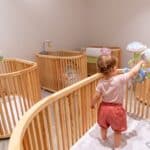
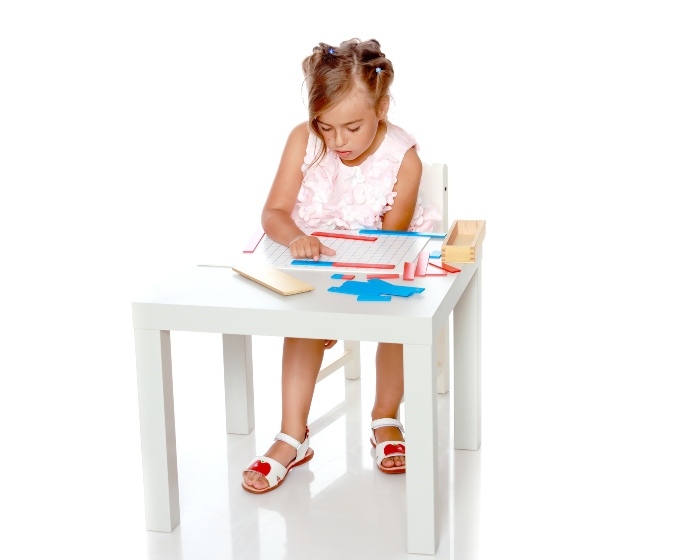
In Montessori settings, the room is often designed so children can do more for themselves. Furniture is child-sized. Materials are placed where children can reach them. Activities are intentional and often used one at a time, in a specific way. The goal is not constant entertainment. It is focused engagement and growing confidence through repetition and responsibility.
That can be wonderful for a child who likes predictability, concentration, and doing things independently. It can also be a very helpful environment for kids who get overwhelmed by too much noise or too many choices at once.
A daycare classroom may feel more socially energetic. There is often more group activity, more teacher-led transitions, and more open-ended play. Kids may rotate through snacks, centers, outdoor time, story time, and rest on a tighter schedule. For some children, that pace feels fun and natural. They like the variety and group energy.
Neither environment is automatically calmer or kinder. That depends on the staff, class size, and overall quality. A warm, well-run daycare can feel wonderfully secure. A poorly managed Montessori program can still be stressful. Labels matter less than how the program works in real life.
Independence vs Flexibility
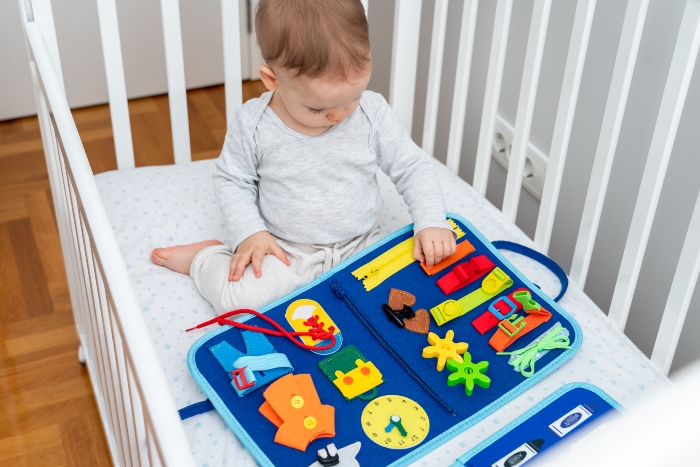
Montessori tends to build independence into the day. Children may pour their own water, clean up their workspace, and practice practical life tasks like buttoning, sweeping, or preparing simple snacks. Those small habits can carry over at home in really helpful ways.
Daycare often offers more flexibility around the realities of childcare. Extended hours, aftercare, and broader age accommodations are common. If you need dependable coverage for a full workday, that can matter just as much as any curriculum.
What Children are Learning in Each Setting
Parents sometimes assume Montessori is more academic and daycare is mostly babysitting. That is not a fair comparison.
A quality daycare can support language development, early math, emotional regulation, motor skills, and social learning every single day. Kids learn through play, routines, and interaction. They practice sharing, waiting, following directions, and navigating friendships. Those are real developmental skills.
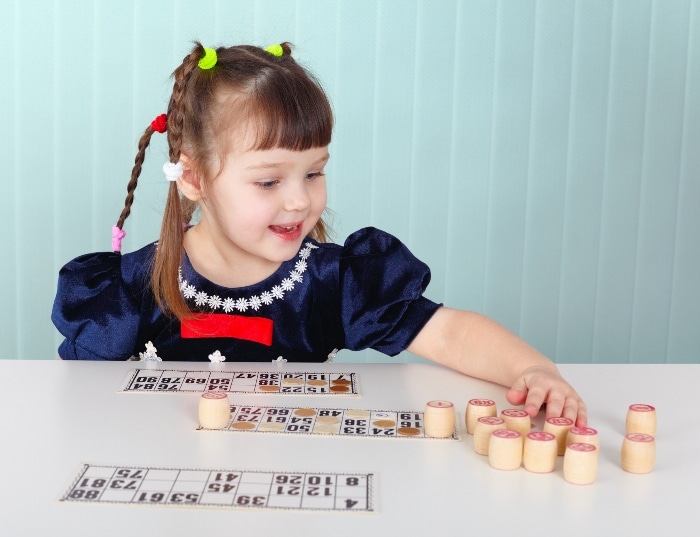
Montessori also teaches academic concepts, but often in a different way. Children use hands-on materials to explore letters, sounds, counting, sequencing, and sensory concepts. The emphasis is usually on concrete learning before abstract learning. Instead of rushing worksheets or memorization, the classroom is meant to help children understand ideas through experience.
If your child is bright, curious, and eager to work alone for stretches of time, Montessori can feel like a natural fit. If your child learns best through movement, imagination, and social play, a play-based daycare or preschool might be a better match.
It also depends on age. Infants and young toddlers need responsive care, strong attachment, and safe routines more than they need a specific educational philosophy. As children get older, the classroom style may start to matter more.
Social Development is Not One-size-fits-all
One reason parents lean toward daycare is socialization. Children are around peers all day, and there are usually plenty of opportunities for cooperative play, group activities, and conflict resolution.
That can be especially appealing if your child is very social or if they have not had much peer interaction yet. Daycare can help children get used to group settings and daily transitions before kindergarten.
Montessori classrooms support social development too, just often in a different way. Mixed-age groups can encourage younger children to observe and learn from older ones, while older children practice leadership and patience. The social tone may be calmer and less centered on big group activities.
If your child is outgoing and loves the buzz of a busy room, they may enjoy daycare more. If your child is slower to warm up or prefers quieter peer interaction, Montessori may feel less overwhelming.
Cost, Schedule, and Parent Reality
This is the part parents sometimes whisper about, but it needs to be said clearly. The best program in theory is not helpful if it breaks your budget or creates impossible logistics.
Montessori programs are often more expensive, though that varies by location. Some private Montessori schools also follow a school-year calendar or shorter day structure, which may not work well for families needing year-round full-time care. Others offer full-day options, but you will want to ask exactly what that includes.
Daycare centers are often built around working parent schedules. That can mean earlier drop-off, later pickup, meals included, and fewer surprises around holiday closures. Not every center is affordable, but many families find daycare more practical for everyday life.
There is no gold star for choosing the more philosophical option if the schedule leaves you constantly stressed. Family stability matters. Your child benefits from a parent who is not scrambling every week to patch together care.
Questions to Ask Before you Decide to Find a Montessori vs Daycare Approach
The montessori vs daycare approach becomes much clearer when you stop looking at brochures and start asking specific questions.
Ask how teachers handle separation anxiety, behavior issues, naps, potty training, and transitions between activities. Ask what a typical day looks like, how much outdoor time children get, and how communication with parents works. Ask whether staff turnover is high. Ask how they comfort a child who is having a hard day.
If you are touring a Montessori program, ask whether it is truly Montessori or just inspired by it. Not every school using the word follows the method closely. Ask about teacher training, classroom structure, and how independence is encouraged without pushing children beyond what is developmentally appropriate.
If you are touring a daycare, ask how learning is built into the day, how classrooms are grouped, and how teachers balance free play with structure. You want more than supervision. You want responsive care and intentional support.
Most of all, watch the children and the adults. Are teachers speaking respectfully? Do kids seem engaged? Is the environment clean but lived-in, not staged for a tour? Your gut matters here.
Which Families Tend to Prefer Each One?
Families who love Montessori often value calm routines, independence, intentional learning materials, and a child-centered environment. They may be looking for a setting that feels less overstimulating and more focused.
Families who prefer daycare often need reliable full-day care, appreciate a flexible routine, and want a socially active setting that fits the pace of working-parent life. They may also like that daycare can feel more casual and easier to blend into everyday family logistics.
Of course, plenty of families choose Montessori for practical reasons and daycare for educational reasons. Real life does not fit into neat categories.
Sometimes the right answer is simply the place where your child is known, cared for, and genuinely welcomed each morning. That may be a Montessori classroom. It may be a daycare center with loving teachers and a great routine.
If you are feeling torn, try letting go of the idea that there is one perfect choice. There is only the choice that fits your child and your family best right now – and that is more than enough.