
How to Prepare Your Child for Kindergarten
The kindergarten countdown can feel surprisingly emotional. One minute, your child is asking for help opening a yogurt pouch, and the next, you are picturing them walking into a classroom without you. If you are wondering how to prepare your child for kindergarten, start here: they do not need to arrive knowing how to read, sit perfectly still, or handle every problem alone. They need a little practice, a predictable plan, and the confidence that home is still their safe place. Let’s take a look at how to prepare your child for kindergarten.

How to Prepare Your Child for Kindergarten Without Overdoing It
Kindergarten readiness is not a race to flashcards. Most teachers expect children to arrive with a wide range of academic skills. What makes the transition easier is helping your child practice the everyday tasks that fill a school day: separating from a caregiver, listening to a new adult, taking turns, using the bathroom, managing supplies, and asking for help.
Think of the summer before kindergarten as a gentle rehearsal, not boot camp. A child who feels capable and supported is often better prepared than one who has spent weeks being drilled on letters but is terrified to walk into a new room.
It also helps to remember that readiness looks different for every child. A chatty, outgoing child may need help waiting their turn. A child who knows every letter may still need time to feel comfortable speaking up. You are not trying to create a perfect kindergartner. You are helping your child take the next small step.
Build a School-Day Routine Before the First Day
A new morning schedule is one of the biggest kindergarten adjustments for families. A few weeks before school starts, gradually move bedtime, wake-up time, and breakfast closer to the schedule you will need on school days. This is especially helpful if summer has included late nights, lazy mornings, and snacks whenever anyone asked.
Practice the whole morning flow a few times. Have your child get dressed, eat breakfast, brush teeth, use the bathroom, put on shoes, and gather what they need. Keep your words simple and give them enough time to try each step before jumping in.
You may discover the real issue is not waking up early. Maybe socks feel unbearable, shoes take forever, or your child melts down when breakfast is not their preferred choice. It is much easier to work through those little trouble spots before you are standing at the door with five minutes to spare.
A visual routine can help children who respond better to pictures than repeated reminders. A few simple drawings or photos showing breakfast, clothes, teeth, backpack, and shoes can make mornings feel less like a string of commands.
Practice the Everyday Skills That Matter Most
Practice makes everything easier, especially when you’re learning how to prepare your child for kindergarten. This is a huge milestone in your child’s life, and they are probably just as nervous as you are. But practicing these skills will help them transition to kindergarten more easily.
Independence does not mean your child must do everything alone. It means they can attempt basic tasks, recognize when they are stuck, and seek help appropriately. Those skills make a busy classroom feel much more manageable.
At home, build practice into ordinary moments. Let your child open snack containers, unzip their backpack (aff link), pull up pants after using the bathroom, and put on their own jacket. Choose a backpack and lunch items they can manage with small hands. A beautiful lunch box is not very helpful if it takes an adult to open every compartment.
There are several skills worth practicing regularly:
- Saying and recognizing their first and last name
- Following two-step directions, such as “put your cup in the sink and choose a book”
- Taking turns during a game or conversation
- Asking an adult for help when they cannot solve a problem
- Using the toilet, washing hands, and handling clothing as independently as possible
- Cleaning up one activity before starting another
Do not turn these moments into a test. If your child struggles with a zipper, say, “Let’s try it together,” rather than, “You should know how to do this by now.” Kindergarten is where children continue learning these things, not where they are expected to have them all mastered.
Talk About What Kindergarten Will Actually Be Like
Children often worry most about the unknown. Instead of offering a vague, “You’ll have fun,” describe what a typical day may include. Explain that they will meet their teacher, put away their backpack, play, learn, have snacks or lunch, use the restroom, go outside, and come home to you.
If your school offers an orientation, classroom visit, or meet-the-teacher event, go if you can. Seeing the building, playground, classroom door, and pickup area turns a big mystery into a real place. If you cannot visit, look at school photos together or drive by the building while talking about the plan.
Be honest about feelings, too. You can say, “Starting kindergarten can feel exciting and a little nervous. Sometimes grown-ups feel that way when they try something new, too.” Avoid promising that they will never feel sad or scared. Instead, reassure them that those feelings are normal and that their teacher will help.
Role-playing can be surprisingly useful. Take turns being the teacher and student. Practice saying goodbye, raising a hand, asking to use the restroom, joining a game, or telling an adult, “I need help.” For a shy child, rehearsing the exact words can lower the pressure when the moment arrives.
Read, Count, and Play Without Making It Feel Like Schoolwork
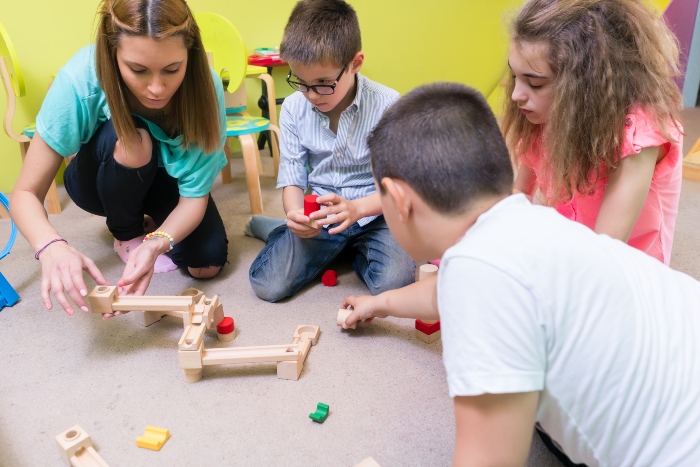
Academic preparation can be simple and playful. Read together every day, point out letters in signs, count crackers at snack time, sing rhyming songs, and let your child draw, cut with child-safe scissors, build, sort, and tell stories. These activities strengthen early literacy, language, fine motor skills, and number sense without making your living room feel like a classroom.
One helpful goal is teaching your child that learning involves trying. When a puzzle piece does not fit or they cannot write a letter the way they want, model calm problem-solving: “That was tricky. Let’s turn it around and try again.” Teachers value persistence, curiosity, and willingness to participate just as much as early academic knowledge.
If your child is eager for worksheets, there is nothing wrong with doing a few. Just keep them in perspective. A child who can identify every uppercase letter but avoids crayons because their hand gets tired may benefit more from coloring, play dough, and sidewalk chalk than another stack of printables.
Help Your Child Practice Social Confidence
Kindergarten asks children to share space, materials, attention, and sometimes feelings. Playdates, library story times, park visits, church classes, or time with trusted relatives can all give children low-pressure opportunities to practice being part of a group.
You can coach social skills in the moment. Try phrases such as, “Can I play?” “Can I have a turn when you are done?” and “I don’t like that. Please stop.” Teach your child that they can move away from unsafe or unkind behavior and tell a teacher or other trusted adult.
Some children walk into a room ready to make friends. Others hang back and watch for a while. Both responses are okay. Do not force a reserved child to perform socially before they are ready. Instead, help them find one manageable goal, such as saying hello to the teacher or playing near another child for a few minutes.
Make the Goodbye Plan Clear and Consistent
For many families, drop-off is the hardest part. Your child may be cheerful at home, and tearful the second they see the classroom. That does not mean they are not ready. It means the separation is hard, and it may take time.
Create a short goodbye routine before the first day. It might be a hug, a high five, a simple phrase such as “I love you, and I will see you after school,” and then leaving. Keep it warm but brief. Lingering, returning for one more hug, or sneaking away can make the separation more confusing.
If tears happen, tell the teacher what helps your child calm down, then trust the classroom team to take it from there. Most children settle faster than parents expect once they have a task, a friendly adult, or something interesting to explore. Of course, if distress continues day after day or affects your child outside school, check in with the teacher and pediatrician for support.
Prepare Yourself, Too
I know that you are probably so focused on how to prepare your child for kindergarten that you forget to prepare yourself. Remember, your child will notice your energy, even when you are trying to play it cool. It is okay if kindergarten feels bittersweet. You are allowed to be proud, nervous, relieved, sentimental, or all four before breakfast.
Handle as many logistics as possible ahead of time: school forms, transportation, labeled belongings, lunch plans, pickup rules, and emergency contacts. A calmer parent creates a calmer launch, even if the morning still includes a missing shoe and an unexpected spill.
On the first day, take the photo if that matters to you, offer the hug, and let the moment be a little messy. Kindergarten is not a test of whether your child can grow up without you. It is a new place for them to practice growing, with your love waiting at the end of the day. Keep in mind that there is more than just this guide on how to prepare your child for kindergarten; you can do more than just the things suggested here. The more prepared they are, the better off your child will be long-term.