
Can Kids Share Bedrooms? What Parents Should Know
A second bedroom can feel like a luxury when your kids are arguing over the top bunk, one child is still awake at 10 p.m., and the baby finally fell asleep 15 minutes ago. So, can kids share bedrooms? Absolutely. Many families make it work for years, whether they are saving money, living in a smaller home, welcoming a new baby, or simply wanting siblings to have more connection.

Photo Credit: Pexels
But a shared room is not automatically peaceful just because you bought matching beds. The arrangement works best when it fits your children’s ages, sleep needs, personalities, and your family’s daily routine. A little planning can prevent the room from becoming the place where every bedtime battle begins. Let’s take a look at can kids share bedrooms!
Can Kids Share Bedrooms Safely?
For most siblings, sharing a bedroom is perfectly safe when the room is set up with age-appropriate sleep spaces and basic household safety in mind. The biggest exception is an infant. Babies need their own safe sleep space, such as a crib or bassinet with a firm, flat sleep surface and no loose blankets, pillows, stuffed animals, or siblings sharing the sleep space.
If you have a baby and an older child, it is often easier for the baby to sleep in your room at first. The American Academy of Pediatrics recommends room-sharing with parents, without bed-sharing, for at least the first six months when possible. That can also protect your older child’s sleep from frequent overnight feeds and crying during those early months.
Once a baby is old enough to move into a shared bedroom, think through the practical details. Anchor dressers and bookshelves to the wall, keep cords out of reach, use a sturdy gate if needed, and make sure the older sibling understands that the crib is not a play area. If bunk beds are involved, follow the manufacturer’s age and safety guidance. In general, younger children should not sleep on the top bunk, and guardrails are nonnegotiable.
Families also sometimes worry about brothers and sisters sharing a room. There is no one age when siblings of different genders must stop sharing a bedroom in a typical family home. What matters is whether each child has adequate privacy, feels comfortable, and has a setup that respects changing needs as they grow. Foster care rules, rental agreements, and local housing standards can have separate requirements, so check the rules that apply to your situation.
The Real Question Is Whether They Can Sleep Together
A shared bedroom can be wonderful for kids who enjoy company and settle easily. It can also be a tough fit for a light sleeper paired with a child who sings, talks, kicks the wall, or wakes before sunrise ready to start the day.
Before moving siblings together, consider their sleep patterns honestly. Do they have similar bedtimes? Does one still nap? Is one child prone to nightmares or sleepwalking? Does one wake up early and immediately want someone to play with? Those details matter more than whether the room looks big enough on paper.
If their schedules are close but not identical, create a simple bedtime routine that gives each child a little attention. One child can read quietly in bed while you tuck in the other. Or you can do pajamas and stories together, then offer a short one-on-one goodnight moment. The goal is not a perfectly silent room. It is helping both children learn that bedtime is calm and boring, even when their sibling is nearby.
A white noise machine (aff link) can help soften small sounds, especially if one child goes to sleep earlier. Blackout curtains (aff link) may keep an early riser from waking everyone at dawn. These are small changes, but tired parents know that even 20 extra minutes of sleep can change the mood of an entire morning.
Give Each Child a Space That Feels Like Theirs
Kids do not need a huge bedroom to feel ownership over it. They do need to know that some belongings, some decisions, and some space belong to them.
Start with clearly defined sleep areas. That might mean separate beds, individual bedding in colors they chose, a small shelf beside each bed, or baskets for books and bedtime comfort items. Even in a tiny room, visual boundaries help. A low bookshelf, a shared rug with distinct sides, or beds placed at opposite walls can make the arrangement feel more fair.
Storage is usually the make-or-break issue. Shared rooms fill up fast with clothes, toys, school papers, and the random treasures children insist are very important. Assign each child a drawer, bin, hook, and laundry hamper. Labeling these spots is especially helpful for younger kids who are still learning where things go.
Try not to force every decor decision into a matching theme. One child may love dinosaurs while the other wants flowers or basketball. Let the room have both. A shared bedroom does not have to look like a catalog page to feel organized and cozy.
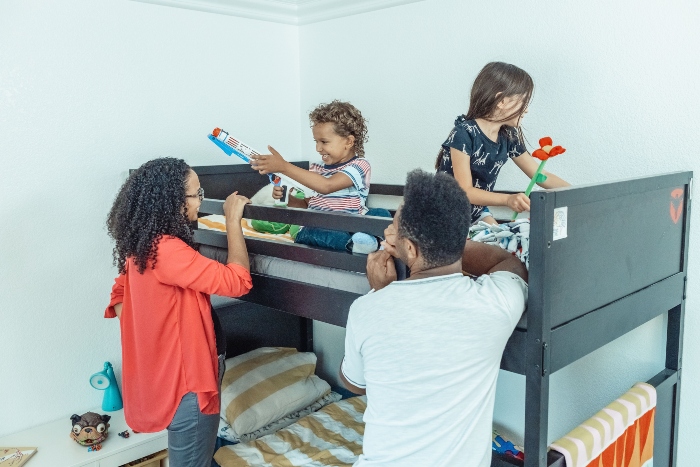
Photo Credit: Pexels
Set Ground Rules Before There Is a Problem
The best time to talk about shared-room expectations is before someone is upset about a missing stuffed animal or a sibling touching their favorite shirt. Keep the rules short and specific enough for your children’s ages.
For younger children, focus on simple expectations: ask before borrowing, keep hands to yourself, use quiet voices after lights-out, and put toys away before bed. Older children may need more privacy-related rules, such as knocking before entering if the door is closed and keeping personal journals, devices, or changing clothes private.
It also helps to explain what happens when the room is too noisy or an argument will not stop. A child may need to finish calming down in the living room, read quietly elsewhere, or take a short break from their sibling. This should not feel like a punishment for having feelings. It is a practical way to protect everyone’s chance to rest.
Expect some conflict, because siblings can argue in a five-bedroom house too. Sharing a room simply makes the friction more visible. Instead of trying to eliminate every disagreement, teach them how to handle the predictable ones: use words, ask for help before yelling, and respect a sibling’s belongings.
When Sharing a Bedroom May Not Be Working
There are seasons when a shared room becomes more stressful than helpful. Repeated sleep disruption, constant fighting, anxiety at bedtime, or a child who never gets a moment of privacy are signs that the setup needs adjustment.
That does not always mean you need another bedroom. Sometimes switching who sleeps where, moving bedtime earlier for one child, reducing toys in the room, or creating a private homework and quiet-time spot elsewhere in the house is enough. A child can have privacy without having a bedroom entirely to themselves. Headphones, a corner desk, a reading nook, or scheduled alone time can go a long way.
For children with sensory needs, significant sleep difficulties, trauma histories, or medical needs, their space requirements may be different. Trust what you are seeing at home. If one child is consistently struggling, a conversation with their pediatrician, therapist, or school support team may offer useful ideas.
Make the Transition Feel Like a Family Project
If your children are moving into a shared room because a new baby is coming or your family is moving, they may have big feelings about losing a private space. Let them be disappointed without trying to talk them out of it. You can say, “I know this is a big change. We are going to make a plan so this room works for both of you.”
Invite them to help make a few choices, such as bedding, wall art, where books will go, or which toys stay in the bedroom. Then practice the routine before the first full night. Spend time reading or playing quietly in the room together so it feels familiar rather than like a sudden punishment.
You do not need a perfect floor plan, perfectly matched siblings, or a magazine-worthy bedroom for a shared room to work. You need a safe sleep setup, enough structure to protect rest, and a willingness to adjust when family life changes. For many kids, the whispered jokes after lights-out and the comfort of not being alone become part of the sweet, messy story of growing up together. Can kids share bedrooms? Absolutely, use this guide on can kids share bedrooms to determine if this is the right solution for your family.

Photo Credit: Pexels