How to Organize School Papers at Home
By the second week of school, the paper pile usually starts. A spelling test on the counter, a field trip form in a backpack, three pieces of artwork on the fridge, and one mystery worksheet already crumpled at the bottom of the car. If you have been wondering how to organize school papers without turning your kitchen into a filing cabinet, the good news is that you do not need a complicated system. You just need one that works on busy weekdays.
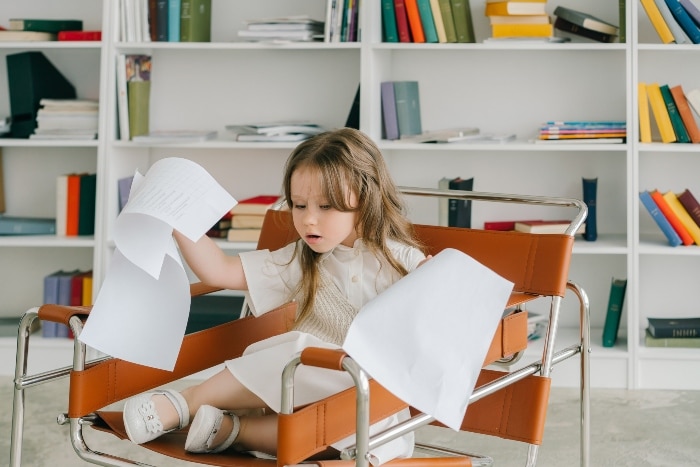
Photo Credit: Pexels
For most families, the real problem is not the amount of paper. It is that every piece of paper feels like it might be important. Some of it is. A lot of it is not. The trick is creating a simple routine so you can tell the difference quickly and keep the papers that actually matter. Let’s take a look at how to organize school papers at home!
Why School Papers Get Out of Control so Fast
School papers multiply because they come in from every direction. Teachers send home forms, folders come back stuffed, kids bring home artwork they love for exactly one day, and graded work shows up in uneven batches. Add multiple children, and it starts to feel like every flat surface in your home has a school theme.
There is also the emotional side of it. Parents do not want to throw away something important, and kids often want to save everything. That is completely normal. A first-grade drawing of the family dog may not look like much to anyone else, but to your child, it is a treasure. A strong paper system has to make room for those feelings while still keeping your home functional.
How to Organize School Papers With a Simple System
The easiest way to manage school papers is to think in three categories: action, keep, and toss. That is it. If your system gets more complicated than that, it is much harder to maintain when life gets hectic.
Action papers are anything that needs your attention soon. That includes permission slips, teacher notes, reading logs, event reminders, and forms that need signatures. Keep papers are the ones worth saving, like report cards, class photos, special projects, and a few meaningful pieces of artwork or writing. Toss papers are the everyday worksheets, duplicate flyers, and random pages that do not need to stay in your house another 24 hours.
When papers come through the door, sort them once. Do not move the same stack from the island to the desk to the dining table, and promise yourself you will deal with it later. That is how paper clutter becomes a long-term houseguest.
Set Up One Landing Spot
Every paper needs a home before it can be organized. Pick one place where school papers land every day. For some families, that is a kitchen counter tray. For others, it is a wall pocket near the door, a small file box, or a section of a family command center.
The best spot is the one you will actually use. If your children always drop backpacks by the garage entry, put the paper station there. If you open folders while making dinner, set up the system in the kitchen. Convenience matters more than aesthetics here.
Keep this area simple. One folder or bin for papers that need action, and one for papers you are holding to file or review. If you want to make it even easier, label each child’s section. That step matters even more if you have siblings in different grades because one child’s library notice can disappear fast in another child’s art stack.
Build a Quick Daily Paper Routine
If you are trying to figure out how to organize school papers for the long term, your daily habits matter more than your storage supplies. A five-minute routine each afternoon saves you from a two-hour paper meltdown on Sunday night.
Open folders and backpacks once a day. Immediately pull out anything with a deadline or signature line. Put those papers in your action spot. Recycle or toss anything clearly unneeded. Put sentimental or important keepsake items in the keep folder instead of letting them drift around the house.
This routine does not need to be perfect. Some days, you will forget. Some days, a paper will still end up under a car seat. That does not mean the system failed. It just means you are raising kids.
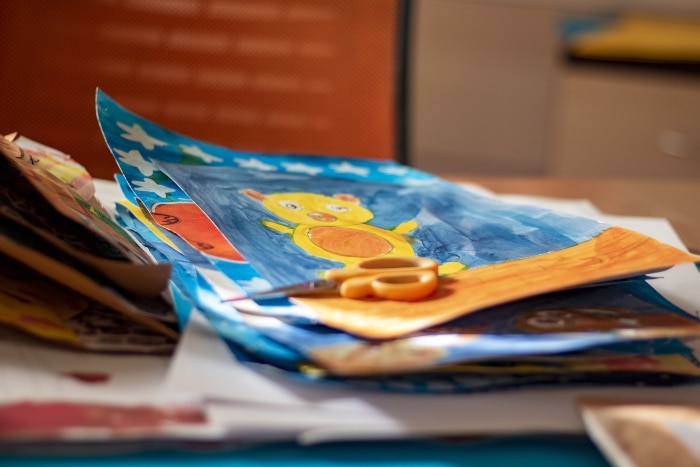
Photo Credit: Pexels
Decide What is Actually Worth Keeping
This is where many parents get stuck. You do not need to save every worksheet your child brings home. In fact, if you do, the truly special items get buried.
A good rule is to keep papers that show growth, milestones, or memories. Report cards, certificates, school pictures, a handwriting sample from the beginning and end of the year, a favorite story your child wrote, or one especially sweet art project are all worth considering. A math drill with an 88 at the top probably is not, unless it marks a meaningful moment for your child.
You can also let your child help choose. Give them a small limit, like picking their five favorite pieces from each semester. That teaches decision-making and makes the saved papers more meaningful. Younger kids may want to keep everything at first, and that is okay. They usually get better at choosing with practice.
Use a Storage System You Can Maintain
You do not need a picture-perfect archive. You need a system that can survive a school year.
For many families, one file box or file drawer with a folder for each child works well. Inside each child’s section, you can keep a folder for current school year papers and another for keepsakes. Some parents prefer one large binder with plastic sleeves for special items. Others like a lidded bin where they can drop selected papers until they sort them later.
It depends on your space and your personality. If you love detailed organization, labeling folders by grade might feel satisfying. If you know you will not keep up with that, go simpler. A basic bin per child is better than an elaborate system that falls apart by October.
At the end of each school year, do one final sort. Remove anything you no longer want, then bundle what stays by grade level. This makes it much easier to find a second-grade report card years later without digging through a mountain of unrelated papers.
Make Room for Artwork Without Covering Every Wall
Artwork is usually the hardest category because kids create so much of it, and a lot of it is genuinely adorable. You do not have to choose between saving everything and throwing it all away.
Display a few favorites at a time, then rotate them out. Keep one folder, portfolio, or storage envelope for artwork worth saving. If your child brings home a lot of large pieces, fold them only if that will not bother you later. Otherwise, use a larger flat bin.
Another option is to take photos of oversized or less durable projects before letting them go. This is especially helpful for glitter-covered creations, cardboard inventions, and crafts that start falling apart as soon as they get home. A photo still preserves the memory without requiring permanent shelf space.
Create a Plan for Paperwork With Deadlines
Not all school papers are keepsakes. Some are time-sensitive and need a different kind of organization. Permission slips, fundraiser forms, teacher requests, and event reminders should never get mixed into the memory pile.
Keep deadline papers in one clearly marked folder or tray that you check every day. If your phone calendar works well for you, add due dates as soon as you see them. The paper itself can live in the action spot until it is complete and returned.
This is one area where over-organizing can backfire. You probably do not need separate folders for lunch menus, PTA flyers, and reading logs. One action folder is usually enough, as long as you check it consistently.
How to Organize School Papers for Multiple Kids
With more than one child, paper clutter can get confusing fast. The easiest fix is giving each child their own color, folder, or bin. That makes sorting faster and cuts down on papers getting mixed together.
Try to process everyone’s papers at the same time each day rather than handling them one child at a time throughout the evening. It is faster, and you are less likely to miss something. If your kids are old enough, involve them. They can empty folders, throw away obvious trash, and place forms in the action spot.
This small habit also teaches kids that paper does not just magically disappear after school. It gets sorted, handled, and put away.
Keep the System Realistic
The best organizing system is the one you can follow in the middle of real family life. If you are juggling work, dinner, after-school activities, and bedtime, your paper routine needs to be quick and forgiving.
That may mean you only do a deep sort once a month. It may mean your keepsake box is not beautifully labeled. It may mean you miss a day and reset the next morning. That is fine. Organized does not mean perfect.
If your current setup is not working, adjust it instead of giving up on it. Move the bin closer to the door. Use fewer categories. Stop saving so much. The goal is not to create a museum of elementary school paperwork. The goal is to keep what matters and make daily life easier.
School papers are one of those small parenting tasks that can feel bigger than they should. But once you have a rhythm, the chaos settles down. A few minutes a day, one landing spot, and a little permission to let go of the nonessential papers can make a huge difference. And when your child proudly hands you that one drawing or story you really do want to keep, you will actually have a place to put it. What changes will you make after reading these tips on how to organize school papers at home?
Photo Credit: Pexels