
What Causes Childhood Nail Biting? Answers for Parents
A chewed nail can show up after a hard day at school, during a long car ride, or right in the middle of a perfectly ordinary movie night. If you are wondering what causes childhood nail biting, the short answer is that it is usually a coping habit, not a sign that you have done anything wrong as a parent.

Nail biting is common in children, especially during the preschool, elementary, and tween years. For many kids, it starts as a passing habit and fades with time. For others, it becomes a familiar way to handle big feelings, boredom, physical restlessness, or the simple need to keep busy.
The goal is not to make your child feel embarrassed every time their fingers reach their mouth. A calmer, curious approach can help you figure out what the habit is doing for them and what support may actually help. Let’s take a look at what causes childhood nail biting.
What Causes Childhood Nail Biting?
Children bite their nails for different reasons, and sometimes there is more than one cause. A child might start during a stressful season and continue long after the original stress has passed simply because the habit feels automatic.
Stress, Worry, and Big Changes
Nail biting can be a small outlet for a child carrying feelings they do not yet know how to explain. Starting daycare, moving classrooms, trying a new activity, family changes, friendship problems, and academic pressure can all make a child feel unsettled.
That does not mean every nail biter is highly anxious. But it is worth noticing patterns. Does your child bite more before school, while talking about a test, after a sibling conflict, or during bedtime worries? The timing can tell you more than the bitten nails alone.
Children often need help naming emotions before they can manage them. A simple, low-pressure question such as, “Your hands seem extra busy today. Was something bothering you?” can open the door without making them feel put on the spot.
Boredom and Waiting
Sometimes nail biting is less about worry and more about having nothing else to do. Waiting in a restaurant, watching TV, riding in the car, standing in line, or sitting through a long lesson can leave busy hands looking for a job.
This is especially true for children who like movement, touch, or constant activity. Nail biting may become their default during quiet moments because it is always available. It is not necessarily defiance, and it is rarely a deliberate attempt to be difficult.
Habit and Imitation
Kids learn by watching. If a parent, sibling, friend, or favorite character bites their nails, a child may copy the behavior without giving it much thought. Once they repeat it enough times, it can become a habit tied to certain situations, such as watching a screen or thinking through homework.
A rough edge on a nail can also start the cycle. Your child notices a snag, nibbles to “fix” it, then creates another uneven edge that invites more biting. This is one reason keeping nails trimmed and filed can make a real difference, even though it will not address every underlying trigger.
Sensory Needs and Self-Soothing
For some children, biting provides a sensory experience that feels calming or organizing. The pressure on the teeth and fingers may help them focus, settle their body, or release nervous energy. Other children may chew pencil erasers, hoodie strings, hair, or shirt collars for similar reasons.
This can happen in any child. It may also be more noticeable in children with attention challenges, sensory processing differences, or developmental differences. The habit itself does not diagnose anything, but it can be useful information to share with your child’s pediatrician if you are seeing other concerns too.
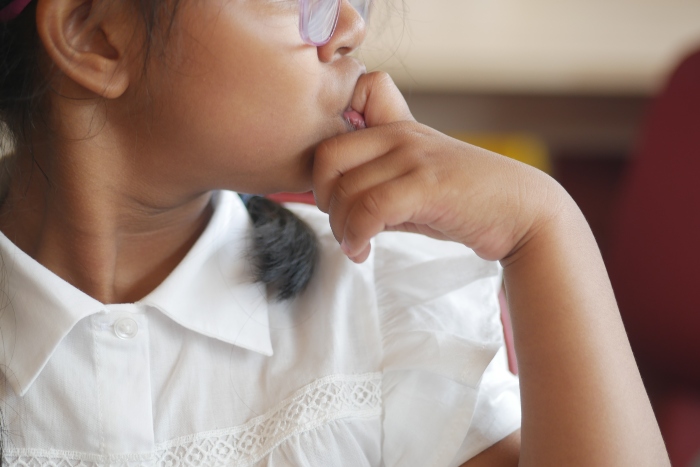
Perfectionism and Frustration
Some kids bite when they are concentrating hard or feel frustrated by something they cannot get right. You may see it during homework, video games, crafts, reading, or competitive activities. A child who puts a lot of pressure on themselves may use nail biting as a quiet release valve.
In those moments, encouragement matters more than correction. Remind your child that learning can feel uncomfortable and that mistakes are part of getting better. A quick break, a drink of water, or a chance to shake out their hands can interrupt the tension before the biting starts.
Why Telling a Child to “Stop” Usually Backfires
Most children who bite their nails already know they are doing it. Some do not notice until an adult points it out. Repeated reminders such as “Get your fingers out of your mouth” can make the habit feel like a battle, and battles create more stress.
Shame can also deepen the cycle. If your child feels embarrassed about their hands, they may hide the behavior rather than ask for help. Try to separate the child from the habit. They are not being gross, careless, or stubborn. They are using a strategy that may no longer be working very well for them.
That does not mean you have to ignore it. It means addressing it in a way that protects their confidence while giving them better tools.
Gentle Ways to Help Your Child Stop Biting Their Nails
Start by choosing a calm moment, not the middle of the behavior. Let your child know you have noticed their nails are getting sore or damaged and that you want to help their hands feel better. If they are old enough, ask when they notice themselves biting most.
Then focus on replacement habits rather than punishment. A child who bites while watching TV may do better with a small fidget, soft putty, a textured blanket, or a simple hand activity. A child who bites during homework may need short movement breaks or something to hold in their non-writing hand.
For a week or two, try a simple family reset:
- Keep nails short, smooth, and free of tempting rough edges.
- Put a small fidget, stress ball, or piece of putty in the places where biting happens most.
- Build in a few minutes of connection after school so worries have a place to come out.
- Use a quiet cue your child agrees to, such as touching your own hand, instead of calling attention to the habit.
- Praise effort, even if progress is uneven. “You caught yourself and grabbed your fidget” is more helpful than “Finally, you stopped.”
Some families consider bitter-tasting nail products. These can work for an older child who wants help breaking the automatic habit, but they are not a great first step for every child. If your child does not understand why it is being used, it can feel punitive. They also do little to solve stress, boredom, or sensory needs underneath the behavior.
Bandages on especially sore fingers can sometimes protect healing skin and serve as a reminder. Again, explain the reason with kindness. The message should be, “Let’s help this finger heal,” not, “You need to learn a lesson.”
When Nail Biting May Need Extra Support
Most childhood nail biting is manageable at home, but there are times to check in with your child’s pediatrician or dentist. Ask for guidance if the biting causes frequent bleeding, swelling, redness, pus, pain, or repeated skin infections. It is also worth getting support if your child is damaging their teeth, biting so intensely that they cannot stop, or becoming very distressed about the habit.
Pay attention if nail biting appears alongside major anxiety, sleep problems, frequent stomachaches, strong fears, school refusal, or other repetitive behaviors that interfere with daily life. Your pediatrician can help you decide whether a mental health professional, occupational therapist, or dentist should be part of the conversation.
Getting help does not mean the situation is severe. Sometimes a few practical strategies and a little reassurance are enough to make a frustrating habit much easier to manage.
A Small Habit Can Carry a Big Message
Nail biting is often your child’s way of saying, “My body needs something,” before they have the words to say it out loud. Maybe they need comfort, movement, an easier transition, a smoother nail, or a safe place to talk about what is weighing on them.
You do not need to solve every trigger in one week. Keep the conversation gentle, watch for patterns, and celebrate small wins. Your child will benefit most from knowing that their messy little habit does not make them a problem to fix. The best way to approach nail biting is to determine what causes childhood nail biting for your child. Once you have the root of the problem solved, you can focus on helping your child refrain from nail biting.