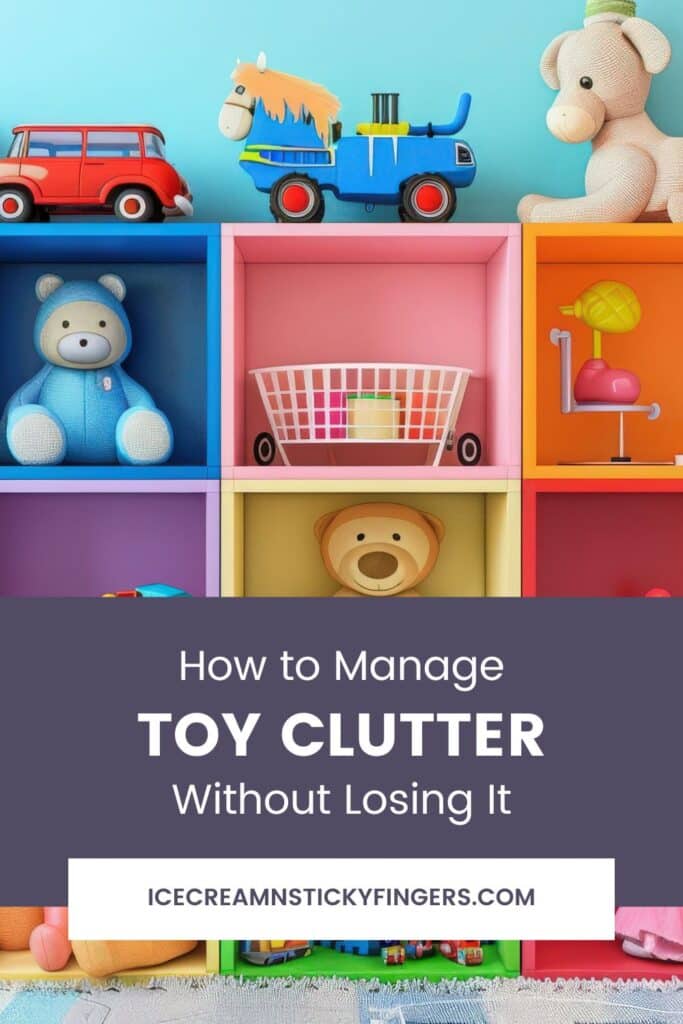
How to Manage Toy Clutter Without Losing It
You clean the living room, turn around, and somehow the floor is covered again. A doll shoe is under the couch, magnetic tiles are in the hallway, and there is one mystery plastic animal in your coffee mug. If you are wondering how to manage toy clutter without spending your whole day picking things up, you are not alone.
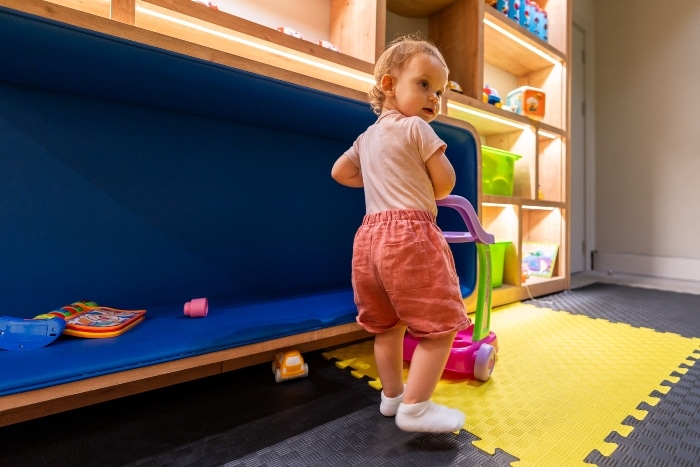
Toy clutter is not just about having too much stuff. It is also about where kids actually play, how often toys get moved from room to room, and whether your storage system makes sense for the people using it. That last part matters more than most parents think. If the bins look nice but your child cannot tell what goes in them, cleanup will still fall back on you.
Why Toy Clutter Gets Out of Hand so Fast
Most families do not end up with toy chaos because they are lazy or disorganized. Toy clutter builds slowly. A birthday here, a holiday there, a few impulse buys, hand-me-downs from cousins, party favors, classroom prizes, and suddenly your house is full of little things with no real home.
Kids also tend to play in layers. They pull out one set, then another, then combine them in ways that make perfect sense to them and zero sense to any sorting system. Blocks mix with dinosaurs, dress-up lands in the play kitchen, and crayons migrate everywhere. That is normal play. The goal is not to stop it. The goal is to make recovery easier.
How to Manage Toy Clutter by Starting Smaller
When parents feel overwhelmed, the instinct is often to buy more storage. Sometimes that helps, but sometimes extra bins just hide the real problem. If every shelf is packed and every basket is full, you do not need more containers first. You probably need fewer toys in circulation.
Start with one small zone instead of the whole house. Pick the playroom corner, the toy shelf in the living room, or the bedroom floor. Pull everything out and sort quickly. Keep the toys your child uses regularly, the toys that still match their age and interests, and a few sentimental favorites. Broken items, incomplete sets, and things your child has clearly outgrown can go.
This is also where honesty helps. If a toy is loud, messy, frustrating to assemble, or ignored 99 percent of the time, it may not deserve valuable space in your home. Not every gift has to stay forever.
Keep Less Available at One Time
One of the easiest answers to how to manage toy clutter is to reduce visual overload. Children often play better when fewer options are available. Too many toys can make a room feel noisy even when nobody is talking.
Try keeping only a portion of toys accessible and storing the rest in a closet or labeled bin. Then rotate them every few weeks. This can make old toys feel new again without buying anything extra. It also helps with cleanup because there is simply less to manage daily.
Rotation does not have to be fancy. A few bins in a hall closet work fine. The point is to create breathing room.
Set Up Storage That Your Kids Can Actually Use
The best toy storage system is not the prettiest one on social media, but it is functional and the best way on how to manage toy clutter. It is the one your child can understand, and your family can maintain on a busy Tuesday.
Open bins, low shelves, and simple categories usually work better than complicated systems. Think cars, dolls, building toys, art supplies, pretend play, and puzzles. If categories get too specific, kids give up, and so do adults.
For younger children, picture labels help more than word labels. For older kids, clear bins can make it easier to see what belongs where. Large baskets are useful for bulky items, but they can turn into junk catch-alls if you are not careful. It depends on the toy type. Building sets with lots of small pieces need more structure than stuffed animals do.
Give Toys a Real Home in the Rooms Where They Land
A lot of toy clutter is really location clutter. If your children always bring toys into the living room, the answer may not be forcing everything back to the playroom every single time. It may be creating a small, contained toy spot where they naturally play.
A basket in the family room, a few books in bedrooms, or an art caddy in the kitchen can work better than one central toy zone that nobody uses. You are not giving up. You are organizing around real life.
Create a Cleanup Routine That Does Not Depend on Your Energy Level
If cleanup only happens when you finally get frustrated, it will always feel bigger than it is. A short daily reset works better than marathon cleanups once a week.
Pick one or two natural times in the day for toy pickup. Before dinner and before bedtime are common choices because they already connect to an existing routine. Set a timer for five or ten minutes and make it the goal to improve the room, not perfect it.
That distinction matters. Perfection is what makes parents quit. Improvement is manageable.
For younger kids, stay involved and give one direction at a time. Put the blocks in the blue bin. Bring the books to the shelf. Find the stuffed animals. General instructions like clean up your toys can be too broad, especially when the room is already overwhelming.
For older kids, a simple expectation helps. One activity comes out at a time, or the floor gets reset before a new game starts. They will need reminders. That is part of the process, not proof the system is failing.
Be Careful With Sentimental Toys and Guilt Clutter
Some toy clutter is emotional clutter. Maybe it was expensive. Maybe Grandma gave it to them. Maybe your child loved it once and you feel bad letting it go. That is a real part of this. This is the hardest part when you have to figure out how to manage toy clutter without your kids getting upset over a special gift.
You do not have to be ruthless to make progress. It is fine to keep a small memory box for special baby toys, favorite stuffed animals, or meaningful gifts. What usually causes stress is when sentimental items stay mixed into everyday play areas long after they are actually being used.
If you are stuck, ask a practical question. Does this need to live in the active toy space, or can it be stored as a keepsake? That one shift can free up a surprising amount of room.
What to Do When New Toys Keep Coming In
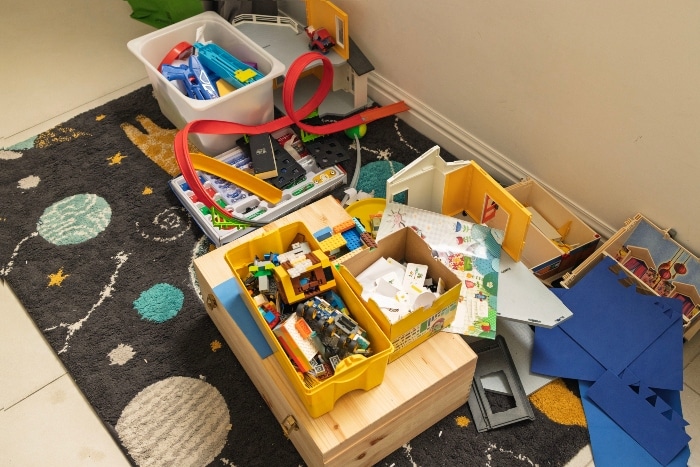
Even the best system falls apart if the inflow never slows down. Birthdays, holidays, and random treats can quickly refill any space you clear.
You do not have to ban gifts, but it helps to set a family rhythm. Before major gift-giving seasons, do a quick toy edit. When something new comes in, look for a natural match to donate or retire. This does not need to be strict every single time, but the habit keeps clutter from quietly rebuilding.
It also helps to guide gift givers when you can. Experience gifts, books, craft supplies, or one larger item instead of several small ones can be easier to manage. Some relatives will listen, some will not. That is just real life. Focus on what you can control once the items enter your home.
How to Manage Toy Clutter in Shared Spaces
Shared spaces are often the hardest because they have to work for everyone. You want your home to feel lived in, but you also do not want to stare at a pile of toys every time you sit down.
In these spaces, boundaries matter more than volume. A single shelf, one cabinet, or two baskets can keep toys present but contained. Once toys spill beyond that limit, it is time to reassess what stays there.
This is especially helpful for families without a dedicated playroom. You do not need a huge house to have less toy stress. You need a clear limit and a routine for returning things to it.
At Ice Cream n Sticky Fingers, we know a lot of family life comes down to systems that are simple enough to keep using. Toy clutter is one of those areas where realistic beats perfect every time.
When the Problem is not Clutter, But Cleanup Resistance
Sometimes the toys are manageable, but your child fights every cleanup. In that case, the issue may be less about storage and more about transition.
Many kids struggle to stop playing, especially if they are in the middle of something imaginative. Warnings help. So does naming the next step clearly. Five more minutes, then we put the animals away and wash hands for dinner. That feels more doable than a sudden stop.
Some kids also need cleanup to feel more concrete. A race against the timer, a cleanup song, or a challenge to find all the red items first can make a big difference. You are not bribing them into basic responsibility. You are helping them bridge from play mode to task mode.
If your child is very young, remember that cleanup is a learned skill. They are not supposed to be naturally great at it yet.
Toy clutter can make a whole house feel heavier than it is, but it usually improves with a few simple changes done consistently. Less in circulation, easier storage, and a short daily reset can go further than another weekend spent reorganizing. The best system is the one that helps your family breathe a little easier and leaves enough floor space for actual living.